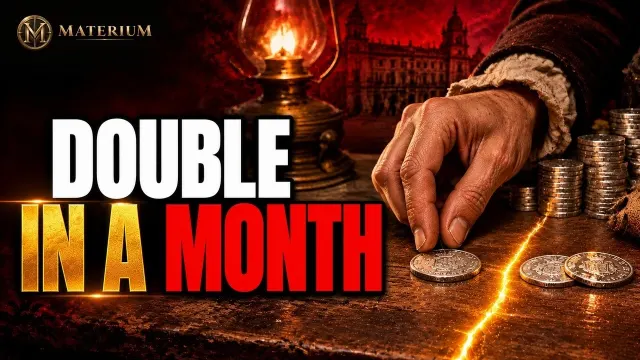
Why is it called a Ponzi scheme? Because in Boston, in 1920, Charles Ponzi promised 50% in 45 days and paid the first investors with money from the ones who came after them. Thousands lined up to hand him their savings. Today, his name is the name of the con.
This is the true story of Charles Ponzi, the Italian immigrant who turned an international reply coupon into the most famous promise in financial fraud: the line on School Street, the mansion and the bank he bought, the expert who ran the numbers, the Boston Post that won a Pulitzer for exposing him, the run, the bankruptcy, the second scheme in Florida, the deportation, and his end in the charity ward of a Rio de Janeiro hospital. He wasn't the first to do it — but the crime carries his name.
Episode transcript
The full narration, split by the video chapters.
0:00 A line around the block
Boston, nineteen twenty. A whole city lined up for him. Today, the scam bears his name. Boston, July, nineteen twenty.
A line of people wraps around the block on School Street. They're not here to cash out. They're handing it to a stranger. A short man with a cane and a straw hat smiles from the doorway.
They cheer him like a magician. In three weeks, they'll all have lost everything. And that man's last name will have become a crime.
0:43 The name that became a crime
The man in the photograph was Charles Ponzi. Today, a century later, he needs no introduction. His name is in dictionaries and in courtrooms. When someone runs this exact con, in any language, there's one word for it.
Ponzi. The only con man whose name became the name of the crime. And here's what almost nobody knows: he didn't invent it. In the last chapter, a man sold a country that didn't exist and promised impossible riches.
Ponzi solved what that man couldn't: how to actually pay those riches. For a while. With money from whoever came next. By the end, you'll understand how a penniless nobody pulled it off.
1:33 From Italy to Boston with $2.50
Carlo Ponzi was born in northern Italy, in eighteen eighty-two. Good family, fallen on hard times. He enrolled at the University of Rome, and dropped out. In nineteen oh-three, he sailed for America.
When the ship reached Boston, his money was gone: he'd gambled it away at cards on the crossing. He came ashore, by his own account, with two dollars and fifty cents. And one obsession: this country would make him rich. For fifteen years, it didn't.
He washed dishes, forged a signature, did time twice. At thirty-seven, he was still a nobody. Until an envelope changed everything.
2:22 The letter and the mysterious coupon
August, nineteen nineteen. Ponzi gets a letter from Europe. Inside is a small paper slip. An International Reply Coupon.
Its job was simple: writing abroad, you slipped the coupon into the envelope, and whoever wrote back got their stamp for free. A bureaucratic detail nobody cared about. But Ponzi kept staring. And he saw what no one else could.
2:55 The coupon play
Europe had just come out of the war, broke. Its currencies were nearly worthless. That coupon, bought in Italy or Spain, cost a fraction of its value in the United States. The idea looked brilliant.
Buy dirt-cheap in Europe, trade them for pricey stamps in America, and pocket the difference. On paper, the money multiplied. Best of all: perfectly legal. Or so he told everyone.
3:32 The promise: 50% in 45 days
In December, nineteen nineteen, he founded his company. With a serious, boring name: the Securities Exchange Company. And he hit the streets with a promise no one had ever heard. Fifty percent profit.
In forty-five days. Guaranteed. Give me a hundred today. Forty-five days later, you get a hundred fifty.
3:59 Social proof
The first group was small. A few wary neighbors, nervously putting in a few dollars. Forty-five days later, Ponzi paid them. Every last cent.
Then the real machine kicked in. Because they got paid. And they talked. It's true!
Doubled my money in six weeks! What are you waiting for? Each one told his brother, his brother-in-law, his landlady. Now stop for a second.
Your lifelong neighbor just doubled his savings right in front of you. He flashes the cash. Wouldn't you put in a hundred? Forty thousand people thought so.
No one asked where the money came from. They just wanted in before it was too late. This might sound familiar. If you or someone in your family was ever promised double their money in a few weeks, because a friend "already got paid," tell us in the comments.
Your story could be the warning another family needs. And the line was only getting started.
5:19 The line on School Street
What came next was unprecedented. People lined up at dawn. Cops, priests, laborers, widows. Many mortgaged their homes to invest more.
Ponzi paid agents a commission to bring in new clients. By the spring of nineteen twenty, a million dollars a week was pouring in. At its peak, a million in a single day. So much cash, they stuffed it in drawers and wastebaskets.
The two-dollar nobody was the most admired man in Boston. Remember this: the trick that made him famous wasn't his. Someone had used it before, in Europe.
6:05 The scheme's secret engine
There was a huge problem. Ponzi wasn't buying coupons. Not one. All told, he spent under a hundred dollars on them.
The arbitrage that sounded so brilliant was impossible in practice. To pay what he promised, you'd have needed a hundred and sixty million coupons circulating worldwide. How many actually existed? About twenty-seven thousand.
So where did the money to pay everyone come from? From one place only. From the pocket of the next person through the door. The first got paid with money from the second.
The second, with money from the third. As long as newcomers kept coming.
6:55 The empire: a mansion, a bank and a gold-tipped cane
With that river of money, Ponzi bought the life he'd dreamed of for fifteen years. A mansion with a heated pool. A chauffeured limousine. A gold-handled cane.
He even bought control of a bank: the same one that once refused him a loan. The papers called him a financial wizard. People stopped him on the street to thank him. An Italian immigrant was the American dream in the flesh.
And right at the top, one detail started to crack. Someone, finally, asked a question.
7:38 The expert's doubt: Clarence Barron
The question didn't come from the police. From a newspaperman: Clarence Barron. The country's top financial expert, owner of the Wall Street Journal. They asked him about the Ponzi miracle.
And Barron did what nobody had: the math. He claims he profits from postal coupons. But there aren't enough coupons on the planet to move that money. Not even close.
Then came the killer detail. Ponzi himself didn't keep his fortune in coupons. He kept it in banks, earning peanuts. If he believed in his business so much, why wasn't he investing in it?
8:25 The Boston Post starts digging
The paper that printed those doubts was the Boston Post. Its publisher, Richard Grozier, smelled something rotten and sent his reporters to dig into Ponzi's past. It took guts. Ponzi was the city's hero; attacking him meant attacking the dream of thousands of neighbors.
But the Post kept digging. And what it found would, months later, earn it journalism's highest prize. The Pulitzer. For single-handedly exposing the man everyone cheered.
9:00 "It's pure envy": the challenge
Ponzi didn't hide. He sued the Boston Post for five million dollars. And he went out, all smiles, to greet his admirers. Jealousy?
It's pure jealousy. I pay what I promise. Ask anyone in this line. And incredibly: it worked.
People believed him, not the newspaper. They kept lining up with their money. Here, the two most dangerous triggers work together. Greed, for that fifty percent.
And trust: if so many neighbors got paid, it must be real. Nobody wants to be the only one left out. Who's more to blame: Ponzi, for lying, or a whole city that chose to believe him over the newspaper? I'll be reading the comments.
Meanwhile, in the Post's newsroom, someone was still digging.
10:02 The Montreal file
But the Post was saving the final blow. On August eleventh, it ran an old police record from Montreal. In it, one Carlo Ponzi had done time for forgery. The financial wizard was a forger with a record.
That morning, the line turned around. The same crowd that brought him money now came to get it back, terrified. Ponzi, true to form, came out to calm them. Free coffee and doughnuts.
And in three days he paid back two million dollars, with a smile. But nothing could stop the avalanche now. Easy, folks, easy! There's coffee for everyone.
Ponzi pays. Ponzi has always paid.
10:51 The auditor arrives
The state sent an auditor to go through his books. A methodical man, immune to smiles. He counted everything coming in, and everything Ponzi owed. No coupons.
No investments. He owes millions he doesn't have. He's flat broke. On August twelfth, nineteen twenty, the company collapsed.
Ponzi was arrested. Eighty-six counts of mail fraud. The empire he built in eight months went dark in one afternoon. Ponzi had just fallen.
But the trick that bore his name already had an inventor: a woman, more than forty years earlier.
11:41 Counting the damage
The numbers are hard to believe. Some forty thousand people had trusted Ponzi with their money. Between fifteen and twenty million dollars at the time. Hundreds of millions today.
The crash took down six banks. And the people in line got back pennies on the dollar. Many had put in their whole life savings. And here comes the quietest trigger: shame.
Like the man who bought the Eiffel Tower, many didn't even dare tell their families what they'd lost. The con collects twice: once in money, and once in silence. I never told my husband. He died not knowing we had nothing left.
12:30 Florida, in the middle of the boom
Ponzi went to prison. First federal time, then state time. And out on bail, he did what real con men do. He tried again.
In Florida, during the land boom, he launched a company selling lots. He promised ten times your money. The catch: many of those lots were underwater. Pure swamp.
He was convicted again. Fled disguised as a sailor. Caught in New Orleans. If your parents, grandparents or friends are being promised a fixed interest every month, send them this video.
Hope they never need it. And hit like: so more people see it. Ponzi had one last voyage left.
13:29 The last ship
The United States had had enough. In nineteen thirty-four, it deported him to Italy. The country that denied him his fortune shipped him back like a package. In Italy, he tried lectures and projects.
Nothing worked. No one wanted the man whose name now meant ruin. He got passage to Brazil and crossed the Atlantic one last time, in third class. The same ocean that, twenty years earlier, had promised him a fortune.
14:01 Rio de Janeiro, 1949
Charles Ponzi spent his final years in Rio de Janeiro. Alone. Half-blind from a stroke, half his body paralyzed. He lived on a small allowance and on teaching languages when he could.
On January eighteenth, nineteen forty-nine, he died in the charity ward of a hospital. The man who moved twenty million dollars left, for his own funeral, about seventy-five dollars. They buried him in a pauper's grave. No flowers.
No lines. None of the applause he loved so much. So what if they lost it? I gave them the best show since the Pilgrims landed.
14:50 Law No. 3 of Deception
And yet, his name didn't die with him. It became immortal. Today, every time someone promises impossible returns and pays the old investors with the new ones' money, it has a name. Ponzi scheme.
You'll see it in the crypto that promises a fixed ten percent a month. In the guy who swears his buddy already doubled his money. In the deal where the first get paid… and that's why they bring the next. That's the law Charles Ponzi signed with his own name.
Pay the first ones, and they'll bring you the next. Law number three: pay the first ones, and they'll bring you the next. Thirteen left. In the next chapter: forty-four years before Ponzi, a ruined woman had half of Madrid lining up.
For exactly the same thing. See that code in the corner? If I were you, I wouldn't scan it. Of course, that's exactly what a con man would tell you.
Link in the description and in the pinned comment. Subscribe. Because the next victim could be you.
Test your instincts
Would you fall for this scam?
Question 1 of 2