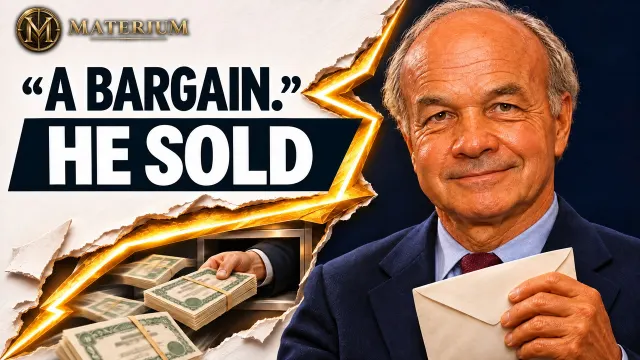
Lou Pearlman, the Backstreet Boys' creator, and the paper airline scam (Orlando, 2007) Lou Pearlman created the Backstreet Boys and 'N Sync. But before the boy bands he already had another company: Trans Continental, with a brochure, an auditor and an "insured" savings account. More than a thousand savers and about ten banks trusted him with their money. What was behind it?
The case file
Who is who, where each person stands legally and where every figure comes from. Primary sources come first: court rulings, regulators and filings.
Key people
- Lou PearlmanOwner of Trans Continental, creator of the Backstreet Boys and NSYNCSentenced to 25 years on May 21, 2008; died in federal custody in a Miami hospital on August 19, 2016
- G. Kendall SharpFederal judge in Orlando who sentenced himGave him the maximum on May 21, 2008, and offered one month off for every million dollars returned
- Michael CrudeleEISA salesman and the scheme's biggest commission earnerSentenced to 36 months in December 2011; the government found no evidence he knew EISA was a fraud
- Alan GrossChildhood friend from Queens who built the model plane in the brochureA witness, never charged: in 2007 he told Vanity Fair and the St. Petersburg Times how the photo was staged
- Thorsten IborgGerman tourist who recognized him at a hotel in BaliPhotographed him in June 2007 and tipped off the St. Petersburg Times, which led to his arrest
- Soneet KapilaTrustee of Pearlman's bankruptcy estate since 2007In 2013 he paid out about $10.4 million against some $260 million in victim claims: roughly 4 cents on the dollar
The numbers and their source
| Item | Figure | Source |
|---|---|---|
| Estimated total loss from the three schemes (investors and banks) | Over $300 million | U.S. Attorney's Office, Middle District of Florida, plea agreement press release (March 4, 2008, archived copy) |
| Raised from individuals, per the facts Pearlman admitted | Over $200 million from more than 1,000 people | United States v. Pearlman, plea agreement (2008, archived copy) |
| EISA accounts, 2003-2006: money in versus money paid back to savers | $118 million in; $43 million back | United States v. Pearlman, plea agreement (2008, archived copy) |
| Bank loans obtained with fake financials and tax returns | Over $100 million from at least ten banks | United States v. Pearlman, plea agreement (2008, archived copy) |
| What victims got in the 2013 payout (the court estimated 3.31% in 2014) | About 4 cents on the dollar: $10.4 million against some $260 million claimed | Pollstar, “Pearlman Investors Get Checks” (November 14, 2013) |
| Sold by the four sales agents sentenced in 2011 | Over $35 million to more than 350 investors | FBI Tampa, “Four Pearlman Sales Agents Sentenced in Orlando” (December 2011, archived copy) |
Primary documents
- U.S. Attorney's Office, Middle District of Florida, plea agreement press release (March 4, 2008, archived copy) web.archive.org
- United States v. Pearlman, plea agreement (2008, archived copy) web.archive.org
- FBI, criminal complaint and affidavit against Louis J. Pearlman (2007), on CourtListener storage.courtlistener.com
- United States v. Pearlman, 6:07-cr-00097, criminal docket on CourtListener courtlistener.com
- FBI Tampa, “Four Pearlman Sales Agents Sentenced in Orlando” (December 2011, archived copy) web.archive.org
- U.S. Bankruptcy Court, M.D. Florida, Kapila v. Mercantile Bank (July 13, 2011) govinfo.gov
- Ask for the exact bank that will hold your money, then call that bank yourself on a number you looked up.
- If you're offered an “employees and friends only” plan and you don't work there, ask why the rule bends for you.
- If a withdrawal stalls over a “wire problem” or some bank abroad, demand the refund in writing and report it to your regulator.
Episode transcript
The full narration, split by the video chapters.
0:00 The boy band maker
The man who created the Backstreet Boys and 'N Sync. And an airline without a single plane. Orlando, two thousand eight. Three hundred months in prison.
And a deal. The keys to your jail cell. One month reduction for every million dollars that you get back. How many months came off?
The MATERIUM team investigated this case through real documents: his plea agreement, the FBI complaint, and the press of the time.
0:32 The man who borrowed the boy bands' fame
Maybe you know the story of the manager who pocketed his boy bands' money. That's the small version. The big one is a Ponzi scheme of over three hundred million. More than a thousand savers.
About ten banks. Abagnale borrowed Hollywood's credibility. This man borrowed his from the biggest boy bands on the planet. From prison, he compared himself to Madoff.
He didn't have any real way to make money. But I had the music. He also had an auditor who was an answering service. A dead man who signed letters.
And a hotel in Bali, under the name “Incognito.”
1:18 Queens, a cousin named Garfunkel
Queens, New York, nineteen fifty-four. Louis Jay Pearlman is born, the only child of a dry cleaner. In his family, the fame belongs to someone else: his first cousin is Art Garfunkel. And he comes to Lou's bar mitzvah.
He dreams of flying. At twenty-four, he writes to a German airship tycoon: Theodor Wüllenkemper. He sends him a giant card covered in glitter. And invites him to dinner at his parents' apartment.
The German accepts. Remember that name. Almost thirty years later, it will turn up again… on a fifty-million-dollar piece of paper.
2:03 The blimp that fell into a landfill
Nineteen eighty. Lou leases a blimp to the jeans maker Jordache. Without owning one. He rushes it together with a used blimp envelope.
On its first flight, it crashes into a landfill. He blames the weight of the gold paint. He fights the insurer for seven years. And wins two and a half million.
Money isn't the prize. It's just a great way to keep score. And here's the part almost nobody talks about. The con man didn't come out of the boy bands.
He was already there when they arrived.
2:44 An airline that existed only on paper
His company is called Trans Continental. It sells shares with a promise: “we're going public.” The airline, he admitted, existed only on paper. But it had a brochure. With a Trans Continental jumbo jet landing in New York.
It was a model plane from his childhood friend, Alan Gross. Lou held it up in front of LaGuardia Airport. You can't see the tail. That's where Lou had his fingers.
In nineteen eighty-nine, the star product arrives: the EISA, a savings account “for employees.” Almost none of the savers were employees. It paid a bit more than a bank. And it was insured, he said, by the FDIC: the federal government's insurance. The plan is available to employees and shareholders.
With coverage by the FDIC and Lloyd's of London. Neither one existed. When someone had doubts, Lou showed them a policy. He never gave them a copy.
It's the start of a debt that, nineteen years later, a judge will turn into months behind bars. One for every million. Maybe this sounds familiar. Were you or your family ever offered an “insured” savings plan that paid more than the bank?
Tell us in the comments. Your story could be the warning another family needs. The brochure was missing some glitz. He'd find it in a blimp hangar.
Nineteen ninety-one. A partner asks him what his dream is. The music business. In his blimp hangar, the Backstreet Boys are born.
Then, 'N Sync. And the savers start getting a new kind of brochure. We were getting a decent return, so we were happy. Besides, we got to meet 'N Sync and the Backstreet Boys.
His family ended up putting in more than twelve million. But a serious company needs an auditor. So Lou made one up. Nineteen ninety-five.
A secretary in Coral Gables answers the phone: “Good morning, Cohen and Siegel.” The partners are always in a meeting. In ten years, the woman who owned the service never spoke to any Cohen. Or to any Siegel. Years later, the FBI found a draft of one of the auditor's letters.
In Pearlman's handwriting. At Mr. Louis J. Pearlman's request, we hereby confirm, as his accountants, the following.
In nineteen ninety-nine, Lloyd's warns him: that policy doesn't exist. Lou replies by letter. Our company holds no policies issued by you. A week later, a new file shows up: “AIG dot doc.” He changed the label.
Not the product.
6:09 The German tycoon who laughed
Nineteen ninety-eight. Julian Benscher, Lou's partner, has never received a dividend. He flies to Germany to complain to the supposed owner: Wüllenkemper, the glitter man. I said, “You own it.
You own eighty-two percent of it.” And he starts laughing. I have planes. But not this Trans Continental. Julian, this has nothing to do with me.
I went cold inside. Everything I had believed for eight years was a lie. According to Benscher, he ended up signing a gag agreement. And the con went on.
Eight more years.
6:59 The banks and the stage set in Mainz
Now he goes after the banks. Over a hundred million. September, two thousand six. On a commercial flight to Germany, Lou tells some Bank of America bankers: This plane is ours.
That's why I fly for free. A limousine takes them to the Cohen and Siegel headquarters in Mainz. Plaques, flags, and two partners bragging about clients like Bayer and Mercedes. A stage set.
How did so many fall for it? Monty, a retiree who lost two hundred thousand dollars, put it this way. I feel stupid for getting involved. But you can't feel that stupid when all these banks got conned as well.
Who's more to blame: the man who signed other people's names, or the banks that lent to him without checking? Tell me in the comments. But the thread that unraveled it all had started two years earlier. With a dead man.
Joseph Chow, a professor in Chicago, had lent him more than fourteen million. He dies. His family wants the money back. If anything, Joseph's investments are worth maybe ten cents on the dollar.
And he doesn't run: he sues them. With a letter in which Chow forgave the debt. The signature was traced. The family's lawyer looks for the auditor.
He finds the answering service in Coral Gables. And Chow isn't the only dead man signing letters. Harry Milner, the executive who signed the letters to investors, died in December two thousand three. He was still signing three years later.
And to the banks, Lou pitched a fifty-million-dollar trust. In whose name? The glitter man's. The one who laughed in Germany and had even sued him.
See the confirmation of today's transfer from the Theodor Wüllenkemper Trust. That trust never existed. He created people. He resurrected the dead.
Fifty million dollars of thin air. One day, every real million will be worth a month of freedom. But the Florida regulator is already on his trail. Two thousand six: the investigator's phone rings.
I don't know if you know who I am. According to the FBI, Lou thought he was dealing with a naive young girl. He was dealing with a pit bull. That fall.
Ben's Deli, in Queens. Lou has lunch with the Sarin brothers. Barry asks for his money back. No problem.
I can pay you back with one hubcap from my Rolls-Royce. He told us he had sixty jets. And for the first time in twenty-two years, he didn't use a credit card. He paid in cash.
The Sarins would never see their money again. In his last four years, a hundred and eighteen million came in. Forty-three went back to the savers. To Lou and his companies, over forty-five.
In November, a note in his handwriting sends half a million to the Netherlands. Where's the rest? It's the first thing a judge will ask him. December, two thousand six: Trans Continental stops paying.
Lou leaves the country. When his offices turn up empty, he writes to the Orlando newspaper. My executive team and I are working hard to resolve the issues. June, two thousand seven.
Bali. At breakfast in his hotel, a German tourist recognizes a man from a documentary about boy bands. He takes a photo. And sends it to a Florida journalist's blog.
She alerts the FBI. At the hotel, he was registered as “A. Incognito Johnson.” With someone else's credit card and twenty thousand dollars in cash. From prison, he explained it to Gross.
I stay under incognito names all the time when I travel. Look: it wasn't a bank or a regulator that found him. It was a tourist with a camera. We can be that tourist here, too.
If you know a con artist whose story deserves a chapter, write it in the comments. We investigate the most requested ones. Indonesia deports him. The FBI takes him to Guam.
And from there, to Orlando. March, two thousand eight. He pleads guilty. I'm accepting full responsibility.
And the made-up auditor's reports? They were prepared by someone else for us. The judge asks him where the money is. In different investments.
Aircraft, living expenses, working capital. May twenty-first. The sentencing. The courtroom, packed with victims.
I'm truly sorry, Your Honor, to all the people who have been hurt and victimized by my actions. His lawyer asks for less than twenty-five years. Mr. Pearlman voluntarily returned to the United States to face these charges.
No. I want to say clearly: there's no pot of gold out there. To argue for less, he cites other frauds. One is Enron: you'll see it in the next chapter.
The judge has read his letters. The sympathy factor just doesn't run very high with the court. Five victims speak. Juanita, from St.
Pete Beach. Her husband, Roger, was eighty-seven when they invested. When he found out we'd been swindled, he cried. He died seven months later, thinking he had failed to provide for me.
Monty, the retiree who lost two hundred thousand. He now lives on Social Security. Why isn't there at least one year for every million stolen? And Marie.
I had my money in a savings account. What could be safer than a savings account? Then the prosecutor says what almost nobody knows about this story. The story is that he did this long before he got big.
And once he was big, he did nothing to stop. The boy bands didn't make him a con man. They gave him the brochure. Twenty-five years, the maximum.
Anything to add, Mr. Pearlman? Nothing, Your Honor. Thank you.
The judge turns to the banks. In his view, they were negligent. Where are the Transcontinental planes? Nobody saw any flying around.
At last, the keys to his cell. With fine print: real dollars, in the savers' pockets. The house and the cars don't count: only new money, starting today. The key is his.
Everything goes up for auction. The key to the city of Orlando they had given him: fourteen hundred dollars. The trustee recovers about thirty-seven million. After the lawyers are paid, the savers get about four cents on the dollar.
Seland Williams had lost nearly a hundred and ninety thousand dollars. In twenty thirteen, he was expecting a check for about four hundred. I had pretty much given up on it. Twenty fourteen.
From prison, he's asked how he could lie to older people. It's like a dam that keeps springing holes. You keep plugging them. And you don't see you need a new dam.
And the judge's offer? My sentence has not changed at the moment. But monies have been recovered. Close to forty million, I believe.
The trustee set it straight: “It's not like he wrote me a check.” Lou needed two boy bands to get his famous face. Today, an app is enough. April, twenty twenty-five: in Spain, police bust a ring using fake celebrity videos, made with artificial intelligence. Over nineteen million euros.
Two hundred and eight victims. Spain's market regulator has warned of fake ads with the faces of David Broncano and Dabiz Muñoz. In Mexico, with Carlos Slim's. In the United States, with Jorge Ramos's.
Three checks Lou would never have passed. The FDIC publishes which banks it insures. Public registries show which companies and which auditors exist. With Trans Continental, for years, almost no one ran them.
If your parents or grandparents want a safe savings plan that pays more than the bank, send them this video. Maybe they don't need it today. Hopefully, they never will. And if it helped you, hit like: that way it reaches more people.
One question remains. The judge's. How many months came off? None on record.
He held the keys to his cell in his hand. And he died in prison. It was in August two thousand sixteen, in a Miami hospital. He was sixty-two.
A kid from one of his last bands wrote this when he heard. He was always nice to me. Even when he was stealing from me. He was asked what he wanted the world to know.
That I deeply regret what happened. And I'll be back. A German tycoon. The government's insurance.
Lloyd's of London. A dead man. And on top of that, two boy bands. None of those names were his. “Besides, we got to meet the Backstreet Boys,” said Steven Sarin.
The plane was a toy. The celebrity wasn't. That's Law number thirteen of deception. Someone else's fame is no guarantee of your money.
18:17 Law No. 13 and the next chapter
Law number thirteen: someone else's fame is no guarantee of your money. Three left. In the next chapter: Pearlman invented an auditor. The next company had a real one, one of the Big Five, and that auditor ended up shredding documents.
See that code in the corner? If I were you, I wouldn't scan it. Of course, that's exactly what a con man would say. Link in the description and in the pinned comment.
Subscribe. Because the next victim could be you.
Test your instincts
Would you fall for this scam?
Question 1 of 2