
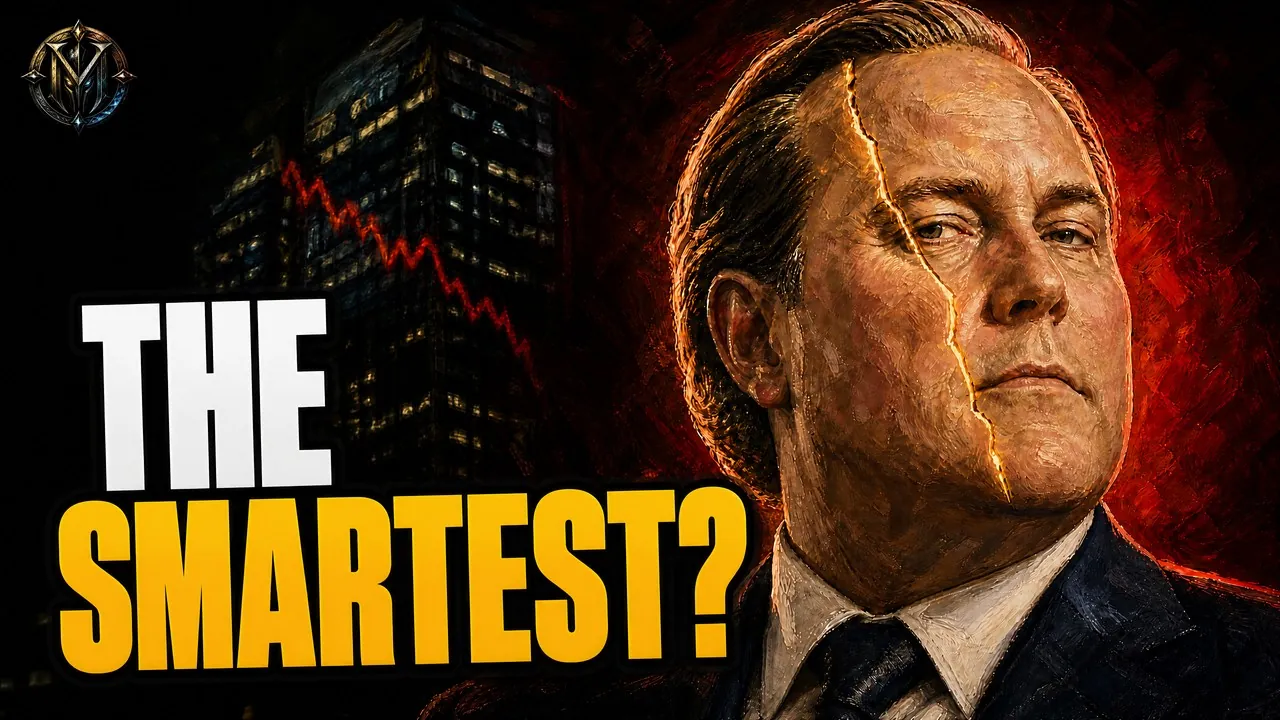
The Enron scandal is the biggest accounting fraud in American corporate history. Enron, a Houston energy company ranked seventh in the country by revenue on the 2001 Fortune 500, spent years inflating its profits and hiding debt and losses in separate entities, with the blessing of its auditor, Arthur Andersen. On December 2, 2001, it filed the largest bankruptcy in US history up to that time, with $63.4 billion in assets. About 21,000 employees had their retirement plans loaded with company stock. Its CEO, Jeffrey Skilling, was convicted in 2006 and served about twelve years in prison.
In 30 seconds
- Enron was not a fake company: it had pipelines, power plants and about 20,000 workers. What was fake were the numbers.
- It booked as today's profit what it expected to earn on twenty-year contracts, using its own assumptions.
- Its chief financial officer, Andrew Fastow, ran the entities that did deals with Enron and took at least $30 million, according to the board's report.
- Kenneth Lay died before sentencing and his conviction was vacated; Arthur Andersen was convicted of destroying documents, and the Supreme Court overturned the verdict in 2005, when the firm no longer existed.
Timeline
Kenneth Lay merges two pipeline companies and Enron is born.
The SEC does not object to Enron using market value on its gas contracts.
Fortune publishes Bethany McLean's article asking how Enron makes its money.
Skilling resigns as CEO, citing personal reasons.
Enron announces a $618 million third-quarter loss.
Enron tells the SEC its accounts for four years cannot be relied on.
Enron files the largest bankruptcy in US history up to that time.
A Houston jury finds Skilling and Lay guilty.
Lay dies of a heart attack before sentencing and his conviction is vacated.
Skilling agrees to a new 14-year sentence and $42 million for the victims.
What was Enron and who was Jeffrey Skilling?
Enron was born in 1985, when Kenneth Lay, the son of a Baptist preacher from Missouri, merged two pipeline companies. Jeffrey Skilling, then a McKinsey consultant with a Harvard degree, pitched him an idea that transformed the company: treat gas as a financial product, with contracts years ahead that could be bought and sold. Enron went from moving gas to trading energy, and then almost anything. Skilling became president and, in February 2001, CEO.
The company spread across half the world: Brazil, Bolivia, Argentina, India. In the United Kingdom, too: Enron built and co-owned the Teesside gas-fired power station in the north-east of England, which started up in 1993 with 1,875 megawatts and became the largest plant of its kind in Europe.
How did Enron cook its books?
Enron's accounting fraud rested on three tools, which are worth understanding without the jargon.
- Collecting the future today. In 1992 the SEC did not object to Enron using so-called mark-to-market accounting, or market value, on its gas contracts. It worked like this: if you signed a twenty-year contract today, you estimated everything you would earn over that time and booked it as profit on the day of signing. Enron did the estimate, with its own assumptions. The problem is that if you collect the future today, tomorrow there is no future left to collect, so it had to sign bigger and bigger contracts. In 2000 Enron signed a twenty-year deal with Blockbuster to sell movies over the internet; there were only a few pilot tests, Blockbuster pulled out after eleven months, and Enron booked more than $110 million in profit.
- The CFO's entities. To hide debt and losses, Enron used separate entities. The most important, called LJM, were run by the chief financial officer himself, Andrew Fastow: he negotiated with Enron while sitting on both sides of the table. According to the report commissioned by Enron's board, the Powers Report, Fastow made at least $30 million from them.
- Insurance paid for with your own stock. Enron had investments that were losing value. To avoid booking those losses, it “hedged” them with entities called the Raptors, which were funded mainly with Enron stock. It is like insuring your house against fire with an insurer whose only asset is your house. According to the same report, the Raptors inflated profits by almost $1 billion over five quarters.
Arthur Andersen, one of the world's Big Five auditors, reviewed those accounts and signed them off. According to the SEC, in July 2000, with the quarter already closed, executives decided to adjust the result to beat analysts' forecasts: they expected 32 cents a share and Enron announced 34.
The question nobody was asking
In March 2001 Fortune journalist Bethany McLean published an article with a simple question: how exactly does Enron make its money? Skilling told her its business was “very simple to model.” Six weeks later, on a conference call with analysts, a fund manager, Richard Grubman, complained that Enron was the only financial institution that could not produce a balance sheet or a cash flow statement with its earnings. Skilling insulted him with the microphone still on. Grubman was asking about the cash, the money that actually comes in. It was the right question.
On August 14, 2001, Skilling resigned for “personal reasons.” That same day Kenneth Lay told staff the company was probably in the strongest and best shape it had ever been in. The next day, executive Sherron Watkins left him an unsigned letter: she feared Enron would “implode in a wave of accounting scandals.”
The employees who couldn't sell
Enron's most loyal audience was inside the company. Enron made its contribution to employees' retirement plan, the 401(k), in Enron stock, which could not be sold until age fifty. According to a Senate report, in 2001 about 21,000 workers had around 60% of that plan in company stock.
On September 26, 2001, in an internal online chat, Lay wrote that the stock was “an incredible bargain” at that price. According to the SEC, he was selling in those months: over 2001 he sold more than $90 million in stock. On October 16 Enron announced a $618 million loss. At the end of that month the retirement plan changed administrators, and for weeks employees could not move their shares. Janice Farmer, a retiree in Orlando with nearly $700,000 in Enron stock, told the Senate: “When I saw the stock drop, I called to sell and was told that I was locked out.”
In October, Arthur Andersen shredded documents for weeks, until a subpoena arrived. On November 8 Enron told the SEC that its accounts for four years should no longer be relied on. On December 2 it went bankrupt. In the days that followed it laid off about 4,000 employees.
Jeffrey Skilling's trial and sentence
In February 2002 Skilling told the Senate that he did not consider himself one of the culprits: “I am not one of the perpetrators, either.” When Senator Barbara Boxer asked him whether a company could use its own stock to manufacture a profit, he replied: “I am not an accountant.” Fastow pleaded guilty in 2004, agreed to cooperate and became the prosecution's star witness. In January 2006 Lay and Skilling sat side by side in the dock in Houston.
On May 25, 2006, the jury found Skilling guilty on 19 of 28 counts, including conspiracy and securities fraud, and Lay guilty on all of his. Lay died of a heart attack on July 5, before sentencing; since he had not exhausted his appeals, his conviction was vacated. On October 23, 2006, Judge Sim Lake sentenced Skilling to 24 years and 4 months and said his crimes had condemned hundreds, if not thousands, of people to “a life sentence of poverty.” Skilling maintained his innocence.
What happened next
In 2010 the Supreme Court concluded that one of the crimes he had been convicted of, depriving the company of “honest services,” covered only bribes and kickbacks. The conviction stood, but the sentence was redone: in 2013 Skilling agreed to 14 years and the handover of about $42 million for the victims. He was released in February 2019, after about twelve years in custody. Fastow served six years and today gives talks on ethics.
The employees recovered little. According to the Senate, the retirement plan lost more than $1 billion, and a small part came back through lawsuits and settlements. Janice Farmer said that in the end she received a check for $4,000. The case changed the rules: in 2002 the United States passed the Sarbanes-Oxley Act, which tightened controls on auditors and executives. December 2, 2026, marks 25 years since the bankruptcy.
Law of Deception No. 14: how to spot the same trap today
The law this case adds to the Laws of Deception is this: if the numbers always add up, someone is making them add up. Quarter after quarter, Enron gave Wall Street what it expected. The lever was authority: a big company, a Harvard-trained CEO and a Big Five auditor. Nobody wanted to be the one who didn't understand the business.
The pattern has come back many times. In the United States, WorldCom admitted in June 2002 that it had booked about $3.8 billion of ordinary costs as investments; the SEC sued the next day, and the overstatement later grew to about $9 billion. In Germany, Wirecard collapsed in 2020 after admitting that €1.9 billion on its balance sheet probably did not exist. The signs:
- Results always on forecast, or slightly above. Real businesses have bad quarters.
- Profits that don't turn into cash. If a company earns a lot on paper but the money coming in doesn't grow at the same pace, ask why.
- Related entities and deals with executives. When an executive sits on both sides of the table, the conflict of interest is the business.
- Answers that dismiss the question. “You haven't understood our model” is not an answer.
- Your savings in your own company. Concentrating your retirement in the stock of the company you work for exposes you twice: your job and your savings.
In the United States, the annual reports (10-K), quarterly reports and cash flow statements of listed companies are free on the SEC's EDGAR database; in the United Kingdom, the accounts of any company are filed at Companies House, and those of listed companies also appear in the FCA's National Storage Mechanism. If you suspect securities fraud, you can send a tip to the SEC or report it to Report Fraud (formerly Action Fraud) in the UK. Before investing, our guide on how to spot a scam brings together the basic checks.
Watch the full episode
Episode 14 of MATERIUM reconstructs the case with the Senate records, the SEC documents and the Houston trial, from the staircase of the 1998 set to the cardboard box of 2001. It is in the episode on Enron.
 The full episodeEnron: A Harvard MBA Told the Senate “I’m Not an Accountant”
Subscribe for the premiere
Frequently asked questions
What happened to Enron?
Enron, a large Houston energy company, inflated its profits for years and hid debt and losses in separate entities. When it came out, in October and November 2001, the stock collapsed, and on December 2, 2001, it filed the largest bankruptcy in US history up to that time, with $63.4 billion in assets.
How did Enron cook its books?
With three tools: it booked on the day of signing all the profit it estimated a contract would earn over years; it hid debt in entities run by its own chief financial officer; and it covered losses with supposed hedges paid for with its own stock. According to the Enron board's report, that last tool alone inflated profits by almost $1 billion over five quarters.
What sentence did Jeffrey Skilling, the Enron CEO, get?
In May 2006 a jury found him guilty on 19 of 28 counts, and in October he was sentenced to 24 years and 4 months. After a 2010 Supreme Court ruling, his sentence was redone, and in 2013 he agreed to 14 years. He was released in February 2019.
What did Enron employees lose?
According to the US Senate, about 21,000 workers had around 60% of their retirement plan in Enron stock and lost more than $1 billion. Through lawsuits and settlements they recovered only a small part.
Sources
- Powers Report, Special Investigative Committee of the Enron board (February 1, 2002)
- SEC, complaint against Jeffrey Skilling and Richard Causey, Litigation Release 18582
- SEC, complaint against Kenneth Lay, Litigation Release 18776
- US Department of Justice, verdict against Lay and Skilling (May 25, 2006)
- US Department of Justice, Skilling resentenced to 168 months (2013)
- US Supreme Court, Skilling v. United States (2010)
- US Senate, hearing with Enron employees and retirees (December 18, 2001)
- US Senate, Commerce Committee hearing with Jeffrey Skilling (February 26, 2002)
- Fortune, Bethany McLean, “Is Enron Overpriced?” (2001)
- SEC, complaint against WorldCom, Litigation Release 17588 (2002)
- SEC, background on SEC v. WorldCom
- English Wikipedia, 'Teesside power station'