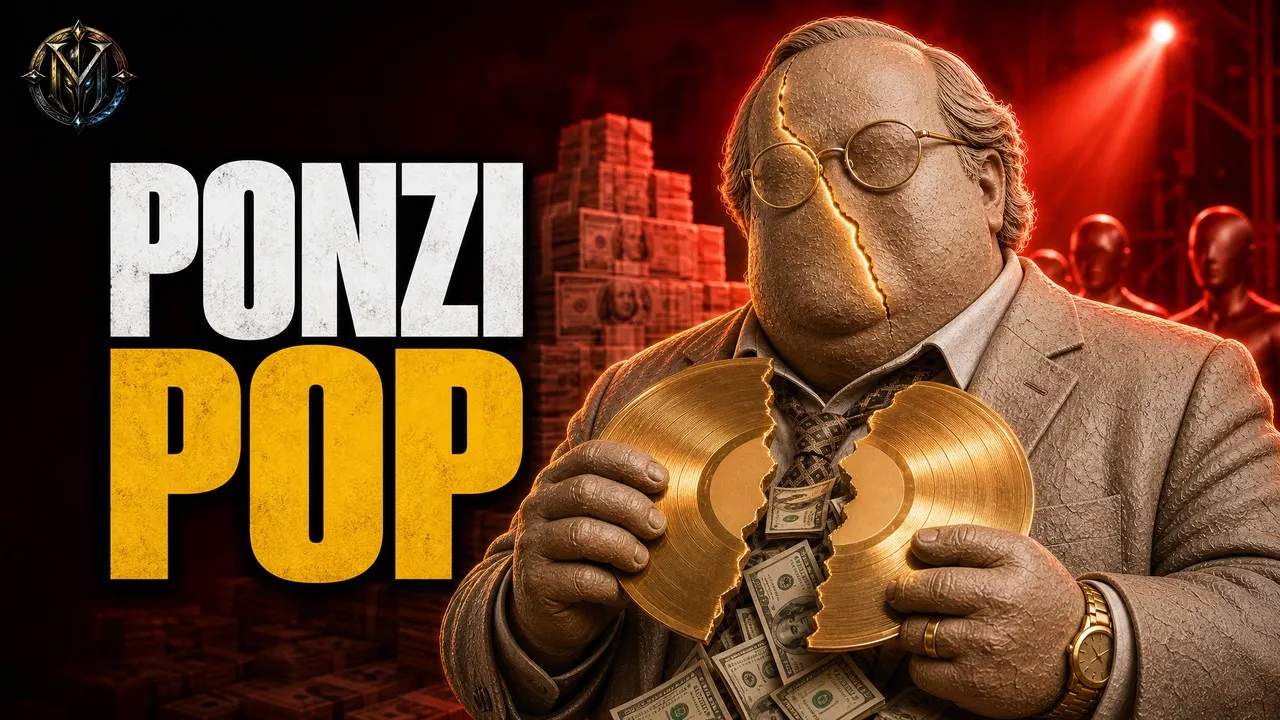
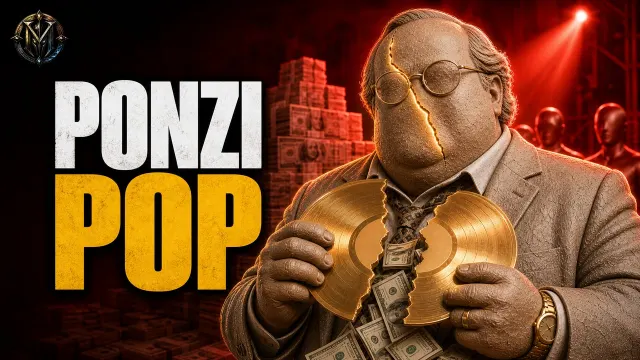
Lou Pearlman, the Orlando businessman who created the Backstreet Boys and NSYNC, ran a Ponzi scheme for more than twenty years through his Trans Continental group. He sold shares in an airline that, according to his own plea agreement, had no planes, no employees and no revenue, along with savings accounts he said were insured by the federal government. In total, more than $300 million from more than a thousand savers and about ten banks. In March 2008 he pleaded guilty, and on May 21 a federal judge sentenced him to 25 years. He died in prison in 2016. His victims got back about four cents on the dollar.
In 30 seconds
- From the 1980s, Pearlman sold shares in Trans Continental on the promise that the company was about to go public.
- From 1989 he sold EISA accounts: an “employee” savings plan that, he said, was covered by the FDIC and Lloyd's of London. No such insurance existed.
- The boy bands did not create the fraud: they gave it a shop window. Investors received brochures and got to meet the groups.
- His auditor, Cohen and Siegel, was a telephone answering service in Coral Gables.
Timeline
Louis Jay Pearlman is born in Flushing, Queens, the son of a dry cleaner.
He starts selling EISA accounts, a supposed employee savings plan insured by the FDIC.
He launches the Backstreet Boys from Orlando; NSYNC follows.
Lloyd's of London warns him that the policy he shows investors does not exist.
Florida's regulator declares the EISA plan a fraud; Pearlman has already left the country.
He is found at a hotel in Bali, registered as “A. Incognito Johnson.”
He pleads guilty to conspiracy, money laundering and a false claim in his own bankruptcy.
Judge G. Kendall Sharp sentences him to 25 years in prison.
The trustee distributes what was recovered: about four cents on the dollar.
He dies in custody at a Miami hospital, aged 62.
Who was Lou Pearlman?
Louis Jay Pearlman was born in 1954 in Flushing, in the New York borough of Queens, the only child of a dry cleaner. In his family, fame belonged to someone else: his first cousin is the singer Art Garfunkel. Pearlman dreamed of flying. In 1980 he leased a blimp to the jeans brand Jordache before he owned one; the one he hurriedly put together crashed on its first flight. Over the years he built a group of companies in Florida, Trans Continental, that claimed to be in aviation and aircraft leasing.
In 1993, in a blimp hangar in Kissimmee, near Orlando, the Backstreet Boys were born. Then came NSYNC. Both groups sold millions of records. That success, which was real, is what made everything else believable.
What did Lou Pearlman do? How the scam worked
The 2008 plea agreement, in which Pearlman admitted the facts, describes three deceptions that fed one another.
- Shares in a paper airline. Transcontinental Airlines, according to the agreement, had “no revenues, no airplanes, no employees,” and no contracts with airlines. To investors and banks, Pearlman said it billed more than $100 million a year. One brochure showed a company plane in New York: according to his childhood friend Alan Gross, it was a model that Pearlman was holding in his fingers.
- The EISA accounts. From 1989 he sold a savings plan “for employees and shareholders” with a return slightly higher than a bank deposit. Almost none of the savers were employees. He told them the money was insured by the FDIC, the federal agency that protects bank deposits in the United States, and reinsured by Lloyd's of London or by AIG. None of it was true. When Lloyd's warned him in 1999 that the policy did not exist, he changed the insurer's name on the documents.
- Bank loans on fake paperwork. From at least 2002 he obtained more than $100 million from about ten banks with financial statements from a non-existent auditor, tax returns he never filed and a supposed $50 million trust in the name of Theodor Wüllenkemper, a German airship businessman who, according to his representative, never had such a fund.
The underlying mechanism was that of a Ponzi scheme: new money paid the interest owed to earlier savers. According to the agreement, of the $118 million that came into the EISA accounts between 2003 and 2006, only $43 million went back to savers; more than $45 million went to Pearlman and his companies.
The auditor that was an answering service, and the signatures of the dead
A serious company needs an auditor, so Pearlman made one up. Cohen and Siegel, the firm that signed off on his accounts, was a telephone secretarial service in Coral Gables: the receptionist answered with that name and the partners were always in a meeting. The FBI affidavit records that investigators found a draft letter from the supposed auditor handwritten by Pearlman himself.
The thread began to unravel with a dead man. Joseph Chow, a professor in Chicago, had lent him more than $14 million. When Chow died and his family asked for the money, Pearlman produced a letter in which Chow forgave the debt. The family's lawyer went looking for the auditor and found the answering service. Harry Milner, the executive who signed letters to investors, had died in December 2003, and his signature kept appearing years later. An IRS investigator summed it up to the Tampa Bay Times: “He created people. He resurrected the dead.”
The escape to Bali and the 2008 case
In December 2006 Trans Continental stopped paying. In February 2007 Florida's financial regulator called the EISA plan a fraud, and Pearlman was already out of the country. In June 2007 a German tourist recognized him at breakfast in a hotel in Bali, took his photo and sent it to the blog of a Florida journalist, who alerted the FBI. At the hotel he was registered as “A. Incognito Johnson.” Indonesia expelled him and the FBI flew him to Orlando.
On March 6, 2008, he pleaded guilty to four counts: two of conspiracy, one of money laundering and one of making a false claim in his own bankruptcy. He admitted owing $200 million to his victims. At the sentencing hearing on May 21, with the courtroom full of savers, a widow from St. Pete Beach spoke: her husband, who was 87 when they invested, wept when he learned they had been swindled and died seven months later. Prosecutor Roger Handberg stressed that the fraud had begun long before Pearlman became famous.
Judge G. Kendall Sharp imposed 25 years, the maximum, and made an offer: one month off the sentence for every million dollars he returned to investors. “I'm going to give you the keys to your jail cell,” he said, according to the official transcript. There is no record that the sentence was ever reduced for that reason.
What happened next
Everything was auctioned: the Church Street Station headquarters in Orlando, the Lake Butler mansion, platinum records and even the honorary key to the city, which sold for $1,400. The bankruptcy trustee recovered about $37 million, but much of it went on expenses. According to the trustee and the bankruptcy court, savers received about four cents on the dollar. An investor who had lost almost $190,000 was expecting a check for about $400 in 2013.
Pearlman died on August 19, 2016, aged 62, while serving his sentence, in a Miami hospital. His case returned to a wide audience in 2024 with the Netflix documentary series Dirty Pop: The Boy Band Scam, which focuses mostly on his relationship with the groups. The version usually told is the one about the manager who kept his artists' money. The bigger one is about the retirees who believed their savings were insured.
Law of Deception No. 13: how to spot the same trap today
The law this case adds to the Laws of Deception is this: someone else's fame is no guarantee for your money. None of the names in Pearlman's set-up were his own: a German tycoon, the government's insurance, Lloyd's of London, an auditor, a dead man and, on top of that, two boy bands. Each name lent trust to the next, and the last one, the most famous, meant nobody checked the ones before it. “Besides, we got to meet 'NSync and the Backstreet Boys,” recalled a Manhattan dentist whose family put in more than twelve million dollars.
Today the celebrity doesn't even have to exist. Investment ads use famous faces without permission, more and more often in fake videos made with artificial intelligence. In the UK, the consumer journalist Martin Lewis sued Facebook over scam ads that used his name and face; in the January 2019 settlement, the company agreed to fund a £3 million scams project at Citizens Advice and to launch a UK tool for reporting scam ads. We explain it in fake celebrity investment ads. The signs:
- The insurance you can't see. If you're told your money is guaranteed, check it yourself. In the US, the FDIC insures deposits up to $250,000 per depositor, per insured bank, per ownership category, and only at FDIC-insured banks: you can look a bank up with the FDIC's BankFind tool. It does not cover investments. In the UK, the FSCS protects deposits up to £120,000 per person at each authorized bank since December 1, 2025.
- The firm and its auditor. Do they exist? Are they registered? In the US, look up the firm and its salespeople on FINRA BrokerCheck and in the SEC's EDGAR filings; in the UK, on the FCA Register and its warning list of unauthorized firms.
- A famous name as a guarantee. An artist, an athlete or a well-known brand does not answer for an investment they don't manage.
- ”No risk” and better than the bank. If something pays more than a deposit and they say it carries no risk, the risk is you.
If you've already handed over money, report it to the FTC at ReportFraud.ftc.gov and to the SEC in the US, or to Report Fraud (formerly Action Fraud) in the UK. Our guide on how to spot a scam lists the basic checks before investing.
Watch the full episode
Episode 13 of MATERIUM reconstructs the case with the plea agreement, the FBI affidavit and the transcript of the 2008 sentencing hearing. It is in the episode on Lou Pearlman.
 The full episodeLou Pearlman Got the Keys to His Own Cell. Did He Use Them?
Subscribe for the premiere
Frequently asked questions
What did Lou Pearlman do?
For more than twenty years he sold shares in companies and “insured” savings accounts that did not exist, through his Trans Continental group. According to the plea agreement he signed in 2008, he took more than $200 million from more than a thousand people and more than $100 million from about ten banks.
How long was Lou Pearlman sentenced to prison?
On May 21, 2008, a federal judge in Orlando sentenced him to 25 years, the maximum possible under the charges in his plea deal. The judge offered to take one month off the sentence for every million dollars he returned to investors.
What did Lou Pearlman's victims get back?
The bankruptcy trustee recovered about $37 million. After expenses, savers received about four cents for every dollar lost, according to the trustee and the 2014 bankruptcy court ruling.
When did Lou Pearlman die?
On August 19, 2016, aged 62, while serving his sentence, in a Miami hospital. There is no record that his sentence was ever reduced for repayments.
Sources
- U.S. Attorney's Office, Middle District of Florida, plea agreement press release (March 4, 2008, archived copy)
- United States v. Pearlman, plea agreement (2008, archived copy)
- FBI, criminal complaint and affidavit against Louis J. Pearlman (2007), on CourtListener
- Vanity Fair, Bryan Burrough, “Mad About the Boys” (November 2007)
- Tampa Bay Times, “Regulators call Pearlman savings plan a fraud” (2007)
- Tampa Bay Times, “As he ran, case was built” (July 13, 2008)
- Pollstar (AP), “Pearlman Gets 25 Years” (May 21, 2008)
- Tampa Bay Times, trustee defends the bankruptcy settlement (2013)
- Tampa Bay Times, Lou Pearlman obituary (2016)
- Press Gazette, Facebook settles Martin Lewis's claim over scam ads (January 2019)
- Bank of England, PRA confirms FSCS deposit limit rises to £120,000 (November 2025)