Theranos was a blood-testing company founded in 2003 by Elizabeth Holmes, then a 19-year-old Stanford student who dropped out the following year. It promised hundreds of tests from a drop of blood from a finger, in minutes and cheaply. By 2014 it was valued at $9 billion. According to the SEC, its machine, the Edison, ran about a dozen tests; the rest were secretly processed on other companies' commercial analyzers. In January 2022 a jury in San Jose found Holmes guilty of defrauding her investors and not guilty of defrauding patients. She was sentenced to 135 months, reduced to 123 in March 2026, and is serving her sentence in a federal prison in Texas.
In 30 seconds
- Theranos sold a “revolutionary” blood test that, according to the SEC, never did what it promised.
- Its board was made up of former cabinet secretaries, senators and generals, with no experts in clinical lab testing.
- More than 175,000 people had Theranos tests in Arizona; some received wrong results.
- Holmes was convicted of defrauding investors; her number two, Sunny Balwani, was also convicted of defrauding patients.
Timeline
At 19, Elizabeth Holmes founds the company at Stanford that will become Theranos.
Theranos opens its first testing centers in Walgreens pharmacies in Arizona.
Theranos reaches a $9 billion valuation, according to the business press.
The Wall Street Journal reports that its machine ran only a small share of the tests.
The federal health regulator finds immediate jeopardy to patients at its lab.
The SEC charges Holmes with fraud; she settles without admitting or denying the allegations.
Theranos dissolves.
A jury finds her guilty of investor fraud and not guilty of patient fraud.
Judge Edward Davila sentences her to 135 months in prison.
The same judge reduces her sentence to 123 months under a retroactive rule.
What was Theranos and what did it promise?
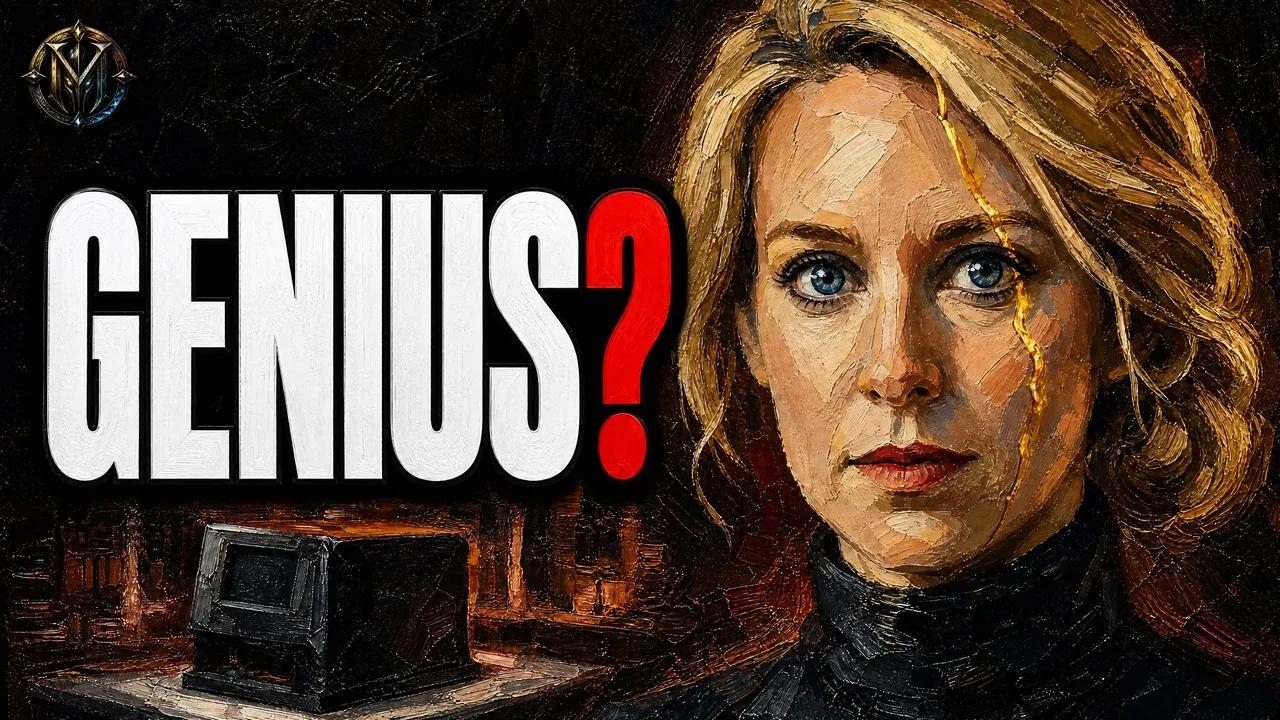
The promise fit inside a black box. A finger prick, a tiny tube and hundreds of tests in a few hours, for a fraction of what a lab charges. Holmes presented it as the end of drawing blood from the arm and as a way to catch diseases early. She wore a black turtleneck, spoke in a deep voice, and the press compared her to Steve Jobs.
Behind her was Ramesh “Sunny” Balwani, her number two at the company and her partner for years, something that did not become public until later. In 2010 Theranos won over the Walgreens pharmacy chain, and in September 2013 it opened its first centers in pharmacies in Arizona.
What did Elizabeth Holmes do? How she fooled investors
The SEC's 2018 complaint and the court rulings describe a deception that stood on three pillars.
- A technology that did not do what was claimed. According to the SEC, of the more than 200 tests on its menu, the Edison ran about a dozen. The rest were processed on other manufacturers' commercial machines, some of them modified.
- Staged demonstrations. According to the appeals court, when investors wanted to see the machine, their finger was pricked and the device ran a “null protocol”: it analyzed nothing, while the samples were processed on other equipment.
- Borrowed endorsements. In 2010 Theranos sent Walgreens validation reports bearing the logos of Pfizer, GlaxoSmithKline and Schering-Plough, which those drugmakers had not written. At trial, in November 2021, her own lawyer asked her who had added those logos. Holmes answered: “I did.” She said she wanted to convey that the work had been done in collaboration, and added: “I wish I had done it differently.”
Then came authority. From 2011, the board took on former Secretary of State George Shultz, Henry Kissinger, former Defense Secretary William Perry, former Senator Sam Nunn and General James Mattis. Some of the country's biggest fortunes, among them the Walton and DeVos families and Rupert Murdoch, put in hundreds of millions. No one with technical authority was able to open the box. According to The Wall Street Journal, people at Walgreens feared that, if they hesitated, Theranos would go to a rival chain. It is the pattern we describe in startup fraud.
The patients in Arizona
In Arizona, more than 175,000 people had Theranos tests. Some testified at trial. Brittany Gould, pregnant after three previous miscarriages, received a result in 2014 that her nurse read as a miscarriage; another lab repeated the test and the pregnancy was still going. Erin Tompkins, who had no health insurance, chose Theranos for the price in 2015 and got a positive result for HIV antibodies; the follow-up tests came back negative.
Inside the company, some people knew. Lab associate Erika Cheung saw the quality controls fail, and so did her colleague Tyler Shultz, George Shultz's grandson. According to Tyler, when he told his grandfather, his grandfather sided with Theranos. Both ended up as sources for journalist John Carreyrou.
The fall: from The Wall Street Journal to the trial
On October 15, 2015, The Wall Street Journal published Carreyrou's report: Theranos's flagship machine ran only a small share of its tests. Holmes had tried to stop it, even writing to Murdoch, the paper's owner and a Theranos investor. In January 2016 the federal health regulator concluded that its California lab posed “immediate jeopardy” to patients. In May, Theranos voided two years of results from its machine. Walgreens closed the centers.
In March 2018 the SEC charged Holmes with an “elaborate, years-long fraud” that had raised more than $700 million; she settled without admitting or denying the allegations. In June federal prosecutors indicted her together with Balwani. In September Theranos dissolved. The two were tried separately.
On January 3, 2022, the jury found Holmes guilty on four counts of defrauding investors, of more than $140 million, and not guilty on the four counts related to patients. Six months later, another jury found Balwani guilty on all twelve counts, including the patient counts. On November 18, 2022, Judge Edward Davila sentenced Holmes to 135 months: “Failure is normal. But failure by fraud is not fine,” he said, according to CBS News. In 2025 the Ninth Circuit Court of Appeals upheld the conviction.
Where is Elizabeth Holmes now? Her release date
As of October 2026, Holmes is serving her sentence at the federal prison camp in Bryan, Texas, where she reported on May 30, 2023. In March 2026 Judge Davila reduced her sentence from 135 to 123 months by applying a retroactive reduction for offenders with no criminal history. In deciding, the court reviewed the documents investors had signed stating that they could bear the loss of what they invested, and found no evidence that they had suffered severe financial hardship. Prosecutors had opposed the reduction.
According to ABC News, cited by CNN on September 23, 2026, she is scheduled to move in August 2027 to a halfway house in Del Valle, near Austin, where she would continue serving her sentence. The Federal Bureau of Prisons put her release in February 2030. In January 2026 she also asked President Donald Trump to commute her sentence; the White House told CNN it does not comment on clemency requests. Holmes maintains her innocence: in a 2025 interview with People she said Theranos failed, but that failing is not fraud. The court awarded investors $452 million in restitution, $125 million of it to Murdoch. In Arizona, a settlement with the state attorney general refunded customers what they had paid: about $61 on average.
The A24 documentary: You Can See Everything
In 2026 the case returned to the headlines with You Can See Everything, an A24 documentary directed by Nathan Fielder and Lance Oppenheim, nearly three hours long. According to The Hollywood Reporter, the first half follows Holmes, her partner and their two children in the weeks before she entered prison, and the second picks up the story two years later, with her already behind bars. It premiered as a surprise at the Telluride Film Festival in September 2026 and opened in US theaters on October 16. Critics have noted that it neither exonerates her nor cleans up her image, although it mixes documentary and reenactment. Before it came Carreyrou's book Bad Blood (2018), HBO's documentary The Inventor (2019) and the series The Dropout (2022).
Law of Deception No. 15: how to spot the same trap today
The law this case adds to the Laws of Deception is this: if you promise the future, nobody audits the present. Theranos sold what the machine would do tomorrow, and that promise replaced checking what it did today. The lever was authority: illustrious names on the board that made questions seem unnecessary. And the fear of missing out on the next big company.
The black box has not gone away; today it is often called artificial intelligence, biotech or “proprietary technology.” Signs:
- No one independent has seen the product work. If the technology is secret and the demonstrations are prepared by the company itself, there is no proof.
- A board of famous names with no industry experts. Prestige in another field is no substitute for technical knowledge.
- Endorsements you can't verify. Big companies' logos, “partnerships” and “validations” that the other party does not confirm.
- Hostility to questions. Lawyers against former employees and journalists instead of data.
- Private rounds in a hurry. Investing in a company that isn't listed usually means less information and more risk.
In the United States, anyone offering you a stake in a private company online through equity crowdfunding must go through an SEC-registered broker-dealer or funding portal that is a FINRA member: check them on FINRA's list of funding portals and on BrokerCheck. If it is a medical device or a lab test, the FDA's device databases and the CMS lab certification (CLIA) lookup show what is cleared and certified. In the United Kingdom, check the platform on the FCA Register and the FCA's warning list, and medical devices with the MHRA. Report investment fraud to the SEC or the FTC (ReportFraud.ftc.gov) in the US, or to Report Fraud (formerly Action Fraud) in the UK. Our guide on how to spot a scam lists the basic checks.
Watch the full episode
Episode 15 of MATERIUM reconstructs the case with the trial transcripts, the messages between Holmes and Balwani, and the 2026 decision that cut her sentence. It is in the episode on Elizabeth Holmes and Theranos.
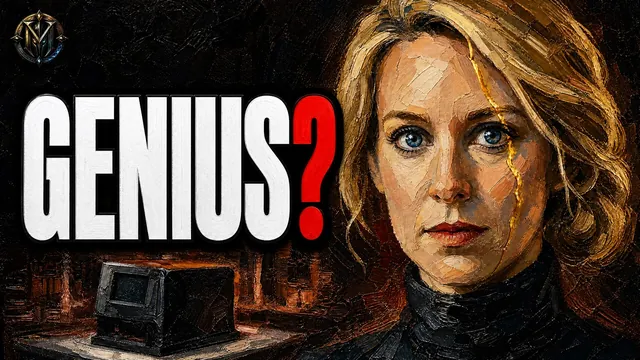 The full episodeTheranos: $9 Billion for a Machine That Never Delivered
Subscribe for the premiere
Frequently asked questions
What happened to Theranos?
Theranos, founded by Elizabeth Holmes in 2003, promised hundreds of tests from a drop of blood from a finger. According to the SEC, its machine ran about a dozen tests and the rest were processed on other companies' commercial analyzers. After the Wall Street Journal's revelations in 2015 and sanctions from the health regulator, it dissolved in September 2018.
What was Elizabeth Holmes convicted of?
In January 2022 a jury in San Jose found her guilty on four counts of defrauding investors, of more than $140 million, and not guilty on the counts of defrauding patients. In November 2022 she was sentenced to 135 months in prison.
Where is Elizabeth Holmes now, and when is her release date?
As of October 2026 she is serving her sentence at the federal prison camp in Bryan, Texas. In March 2026 the judge reduced her sentence to 123 months; according to ABC News, cited by CNN, she is scheduled to move to a halfway house near Austin in August 2027, and the Bureau of Prisons put her release in February 2030.
What is You Can See Everything?
It is an A24 documentary directed by Nathan Fielder and Lance Oppenheim, which followed Holmes and her family before she went to prison and again two years later. It premiered at the Telluride Film Festival in September 2026 and opened in US theaters on October 16, 2026.
Sources
- SEC, complaint against Theranos, Elizabeth Holmes and Ramesh Balwani (March 2018)
- U.S. Attorney's Office, Northern District of California, verdict against Elizabeth Holmes (January 2022)
- U.S. Attorney's Office, Northern District of California, sentencing of Elizabeth Holmes (November 2022)
- US Court of Appeals for the Ninth Circuit, United States v. Holmes (2025)
- CNBC, Holmes's testimony on the drugmakers' logos (2021)
- KQED, Theranos settlement with the Arizona attorney general
- CNN, Holmes approved to move to a halfway house in 2027 (September 23, 2026)
- Axios, what's next for Elizabeth Holmes after the documentary (October 19, 2026)
- The Hollywood Reporter, review of You Can See Everything (September 2026)