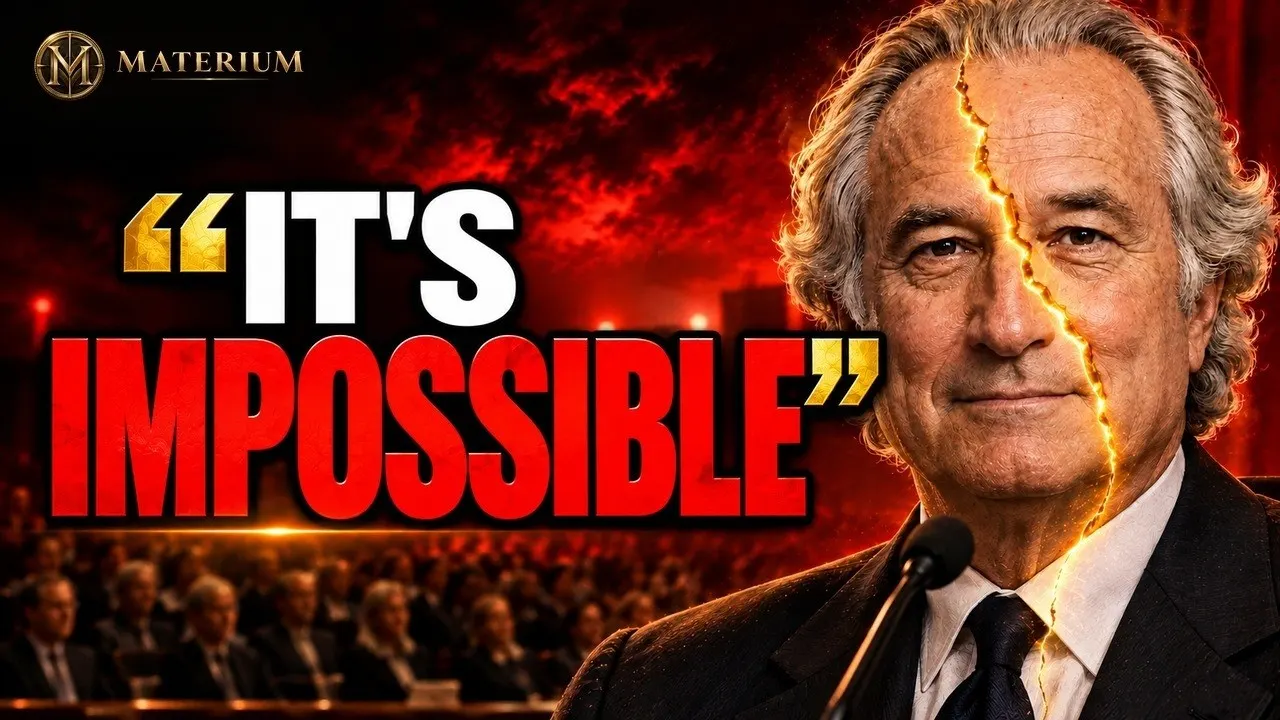
Bernard Madoff, who founded a New York brokerage firm in 1960 and was a former chairman of Nasdaq, ran the biggest Ponzi scheme in history for at least two decades. He promised modest but steady returns, around 10-12% a year, and paid them with new clients' money. His investors' statements added up to about $64.8 billion when he confessed on December 10, 2008. On June 29, 2009, he was sentenced to 150 years in prison, and he died behind bars in 2021. The SEC had received six substantive complaints about him and never stopped him.
In 30 seconds
- Madoff did not invest his clients' money: he deposited it in an account at Chase Manhattan, later JPMorgan Chase, and paid those who withdrew with the money of those coming in.
- Analyst Harry Markopolos warned the SEC in 2000, 2001 and 2005, when he handed over a memo with 29 red flags.
- The 2008 crisis triggered a flood of withdrawals: his clients were asking for about $7 billion, and about $234 million was left in the account.
- The court-appointed trustee and a US government fund have already returned to victims the majority of the principal lost, estimated at about $17.5 billion.
Timeline
Bernard Madoff founds his securities firm in New York.
He becomes chairman of Nasdaq for the first time, a post he holds again in the early 1990s.
The SEC forces a Florida fund that invested with him to return its money and does not look into where it went.
Harry Markopolos hands the SEC his memo with 29 red flags.
The collapse of Lehman Brothers sets off a wave of withdrawals Madoff cannot pay.
The FBI arrests him the day after he confessed the fraud to his sons.
He pleads guilty to eleven federal felonies.
Judge Denny Chin sentences him to 150 years in prison.
He dies at the Federal Medical Center in Butner, North Carolina.
Who was Bernie Madoff? A Wall Street legend
Bernie Madoff grew up in Queens, New York. In 1960 he opened his securities firm; in his version, with $5,000 saved from working as a lifeguard and installing sprinklers. He rarely mentioned that his father-in-law lent him money and passed him his first clients.
He was not a fake in everything. His firm was a pioneer in electronic trading, came to handle a significant share of New York Stock Exchange volume, and he chaired Nasdaq in the early 1990s. He sat on committees that advised the regulators. That real prestige was the cover for the fraud, and it was the first lever he pulled: authority. Why would a man like that need to steal?
How did Madoff's Ponzi scheme work?
Alongside his legitimate business, Madoff managed money for investors. He did not promise to make them rich: he promised something more tempting, a steady return of around 10-12% a year. If the market fell, his fund made a little; if it rose, it made a little too. That regularity was exactly what was impossible, because no market behaves that way for years on end.
Getting in was not easy, or so it seemed. Madoff did not take just anyone, and feeling chosen switched off the questions. Some of his privileged clients, such as the billionaire Jeffry Picower, posted wildly inflated returns in their accounts, as high as 950% in a single year.
The mechanism, as he himself admitted when he pleaded guilty on March 12, 2009, was simple: he never invested those funds. The money went into an account at Chase Manhattan Bank, later known as the 703 account, and was used to pay whoever asked for theirs. It is a textbook Ponzi scheme, the same one Charles Ponzi had run in 1920, only on a scale and for a length of time without precedent.
Everything else was paper. On the 17th floor of the Lipstick Building in Manhattan, a small team produced statements with trades picked after the fact, using the prices in yesterday's newspaper. His finance chief, Frank DiPascali, summed it up when he pleaded guilty in 2009: it was all fake. When an auditor asked for old documents, they printed them and made them look aged, according to testimony at the 2013 trial of five of his employees.
The new money came through middlemen. So-called funds of funds, such as Fairfield Greenwich, which entrusted him with more than $7 billion, and private banks in Europe and Latin America earned fees for placing their clients' money with him. Many victims never heard his name: they trusted the banker they had used for years. Clients of Spain's Banco Santander, through its fund manager Optimal, had more than €2.3 billion exposed.
The question nobody asked: Markopolos and the SEC
In 1999 Harry Markopolos, a Boston analyst, tried to replicate the strategy Madoff claimed to use. The numbers did not work. He later told Congress it took him minutes to suspect fraud: Madoff's returns plotted as a straight line that simply does not exist in markets. He took his analysis to the SEC in 2000 and in 2001. In November 2005 he submitted a memo titled, in essence, "The World's Largest Hedge Fund Is a Fraud," with 29 red flags.
The SEC inspector general's 2009 report documented that the agency received six substantive complaints, carried out three examinations and opened two investigations, and never did the most basic check. In May 2006 Madoff gave investigators an account number at the Depository Trust Company, the clearinghouse that holds securities. A single call would have shown there was nothing there. Nobody called. The inspector general found no evidence of favors or corruption: Madoff did not need them. His reputation meant the examiners, young people facing a legend, did not push.
How did Madoff get caught? The 2008 crisis and the confession
A Ponzi scheme dies in only one way: when everyone asks for their money at the same time. In September 2008 Lehman Brothers collapsed and investors around the world began pulling out funds. By December, Madoff's clients were asking him for about $7 billion. About $234 million was left in the account.
On December 10, 2008, Madoff gathered his sons, Mark and Andrew, at his apartment and, according to the federal criminal complaint, told them it was all "one big lie," basically a giant Ponzi scheme. That night his sons called a lawyer, who contacted the authorities. The next morning, December 11, FBI agents knocked on his door and asked whether there was an innocent explanation. He said there was none.
On March 12, 2009, he pleaded guilty to eleven felonies, including securities fraud, money laundering and perjury. On June 29, 2009, Judge Denny Chin sentenced him to 150 years in prison, the maximum possible. Madoff placed the start of the fraud in the early 1990s; prosecutors and other defendants placed it much earlier.
What happened to Bernie Madoff's victims and to his family
The victims were of every kind: foundations, universities, banks, retirees. Nobel Peace Prize laureate Elie Wiesel lost his life savings and those of his foundation. French financier René-Thierry de la Villehuchet, whose fund had invested with Madoff, took his own life in December 2008. In Spain and Latin America, Banco Santander offered its retail clients compensation in exchange for giving up the right to sue.
Where is the $64.8 billion? Nowhere: it was balances on paper made of invented gains. The trustee, Irving Picard, estimates the principal actually put in and lost at about $17.5 billion. Picard sued banks, funds and investors who had taken out more than they put in. Picower's widow returned $7.2 billion in 2010. JPMorgan Chase, the bank behind the 703 account, paid more than $2 billion in 2014 in settlements with prosecutors and the trustee. By the end of 2023 Picard had recovered about $14.6 billion, and the Justice Department's victim fund had distributed more than $4 billion to about 40,000 people by 2022.
For the family, the ending was tragic. His son Mark took his own life on December 11, 2010, two years to the day after the arrest. Andrew died of cancer in 2014. Madoff died on April 14, 2021, at the Federal Medical Center in Butner, North Carolina.
Law of Deception No. 6: how to recognize the same trap today
The sixth of The Laws of Deception says: prestige is the perfect alibi. Madoff did not fool the world with a brilliant idea, but with a résumé. His prestige convinced clients not to ask and watchdogs not to check. On top of authority came the exclusivity of a club that "doesn't take just anyone" and trust in the familiar bank that acted as the go-between.
The warning signs are still the same:
- Returns that never miss. A straight line up for years is not prudence: it is impossible. A good manager has bad years.
- Exclusivity. "He doesn't take just anyone," "only for select clients." Manufactured scarcity is there so you don't ask questions.
- Custody in the manager's own hands. Your money should sit with an independent custodian, in your name, and you should be able to see it. If whoever manages it also holds it and sends you the statements, nobody is verifying anything.
- A strategy nobody can explain. If a professional cannot replicate the results, as happened to Markopolos, the problem is not your lack of knowledge.
- The trusted middleman. Being offered it by your bank or a well-known adviser does not excuse you from asking where your money is invested and who holds it.
How to check it in the US and the UK. Any investment product or adviser you are offered should be registered. In the United States, look up the firm and the individual on FINRA BrokerCheck and the SEC's Investment Adviser Public Disclosure site, where an adviser's Form ADV also states whether it holds client assets itself; report suspected fraud to the SEC and, for consumer scams, to the FTC at ReportFraud.ftc.gov. In the United Kingdom, check the FCA Register and the FCA Warning List, and report fraud to Report Fraud (formerly Action Fraud). You will find more warning signs in our guides on investment fraud and how to spot a scam.
Watch the full episode
The Madoff case, with real recordings from the 2007 panel, the inspector general's report and a reconstruction of the night he confessed to his sons, is in episode 6 of MATERIUM. To see where the mechanism began, read the case of Charles Ponzi.
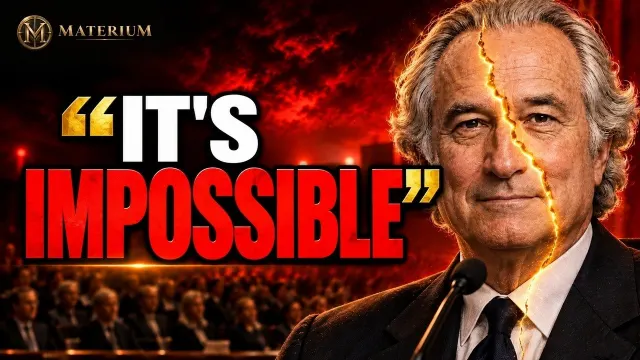 The full episodeMadoff Said No One Could Break the Rules… and He Was Doing It
Watch on YouTube
Frequently asked questions
Who was Bernie Madoff?
A New York financier who founded Bernard L. Madoff Investment Securities in 1960 and was a former chairman of Nasdaq. In December 2008 he confessed that his investment management business was a giant Ponzi scheme.
How did Madoff's Ponzi scheme work?
Madoff did not invest his clients' money: he deposited it in a bank account and paid withdrawals with money from new investors. He sent them statements with invented trades showing steady gains of 10-12% a year.
How much money did Madoff steal?
His clients' statements added up to about $64.8 billion, but most of that was fictitious profit. The court-appointed trustee estimates the principal actually put in and lost at about $17.5 billion.
Who exposed Bernie Madoff?
Analyst Harry Markopolos warned the SEC from 2000 onward, but was ignored. Madoff fell in December 2008, when he confessed to his sons and they reported him to the authorities.
What was Bernie Madoff's sentence?
On June 29, 2009, Judge Denny Chin sentenced him to 150 years in federal prison, the maximum possible. He died in custody on April 14, 2021.
Sources
- SEC, Office of Inspector General, Investigation of Failure of the SEC to Uncover Bernard Madoff's Ponzi Scheme (OIG-509, 2009)
- The New York Times, 150-year sentence (June 30, 2009)
- US Department of Justice, distribution of over $4 billion to Madoff victims (2022)
- Madoff Recovery Initiative, website of trustee Irving Picard
- The D&O Diary, review of recoveries in the Madoff case (2023)
- Encyclopaedia Britannica, 'Bernie Madoff'