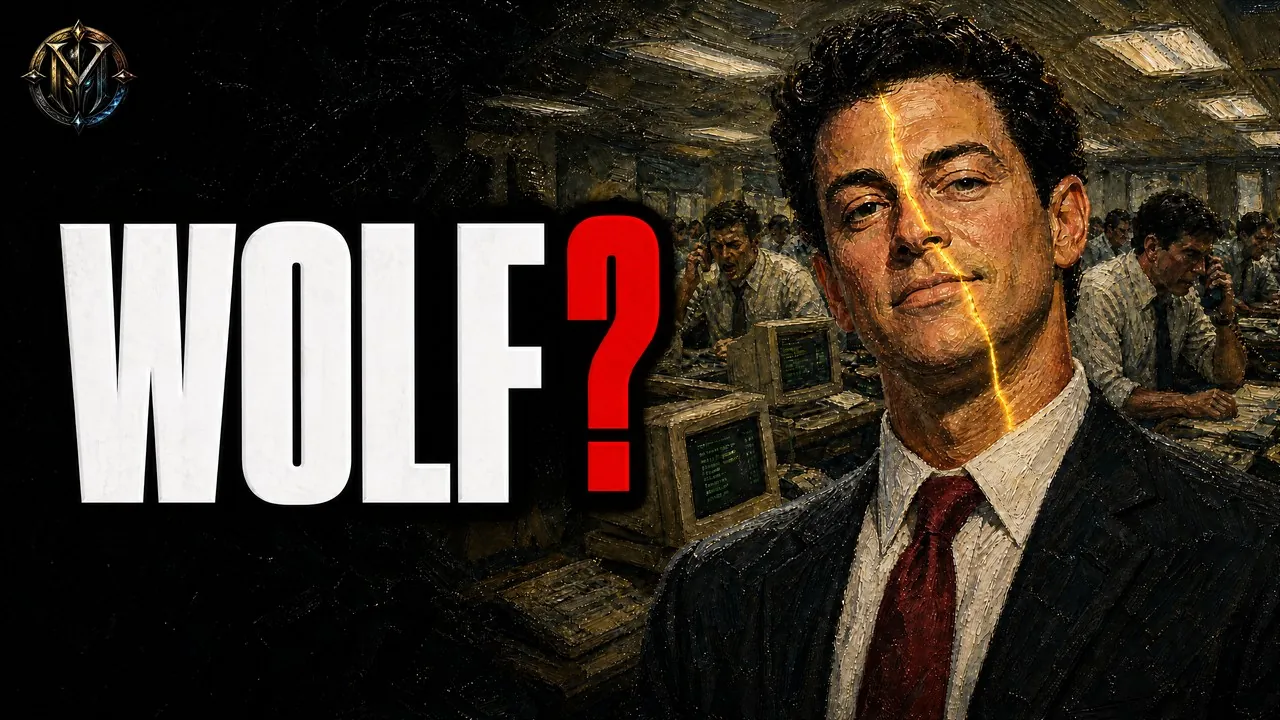
The true story of The Wolf of Wall Street is this: between 1989 and 1996, Jordan Belfort ran Stratton Oakmont, a brokerage in Lake Success, on Long Island, that was never on Wall Street. His brokers sold, by phone, shares in small companies whose price Stratton controlled: they pumped them up and insiders sold at the top. In 2003 he was sentenced to four years in prison and ordered to pay $110.4 million to 1,513 victims; he served about 22 months. By 2018, according to prosecutors, only a small part of that amount had reached the victims. The 2013 movie was based on his own memoir.
In 30 seconds
- At its peak Stratton Oakmont had hundreds of young brokers following an in-house script to pressure small investors all over the United States.
- The fraud was a pump and dump: Stratton placed shares of tiny companies in friendly hands, drove the price up with aggressive selling and sold at the top.
- The SEC fined the firm in 1994 and barred him from the industry, but he kept calling the shots from outside; the brokers' regulator expelled Stratton in December 1996.
- Arrested in 1998, he cooperated with the FBI by recording former partners. Today he gives talks on sales.
Timeline
He starts as a trainee broker at L. F. Rothschild, which lets him go after Black Monday.
With Danny Porush he takes over a small brokerage and renames it Stratton Oakmont.
Forbes runs a critical profile and calls him a twisted Robin Hood.
SEC settlement: Stratton pays a fine and Belfort is barred from the industry.
The brokers' regulator expels Stratton, which goes under weeks later.
Belfort and Porush are indicted for fraud and money laundering; Belfort cooperates with prosecutors.
Sentenced to four years in prison and ordered to pay $110.4 million to 1,513 victims.
He publishes his memoir, The Wolf of Wall Street.
Martin Scorsese's film starring Leonardo DiCaprio is released.
Who is Jordan Belfort? The salesman who knew nothing about risk
Jordan Belfort was born in 1962 in Bayside, Queens, the son of two accountants. By his own account, as a young man he sold ice cream on Jones Beach and dropped out of dental school soon after starting. He set up a meat and seafood home-delivery business on Long Island that went bankrupt when he was about 25.
In 1987 he joined L. F. Rothschild, an investment bank based on Fifth Avenue in New York, as a trainee. His job was dialing numbers so others could sell. That October came Black Monday: the market fell 22% in a day and the firm let him go. But he had already learned where the money was: on the phone.
How Stratton Oakmont was set up
On Long Island he discovered the world of penny stocks, shares in tiny companies that generated enormous commissions. In 1989, with his partner Danny Porush, he took control of a small brokerage and renamed it Stratton Oakmont, a name that sounded like a centuries-old English bank. Its headquarters were in an office park in Lake Success. It was not a Wall Street firm, but on the phone nobody sees the address.
Inside, hundreds of kids with headsets read scripts to investors across the country. The house script, the so-called Straight Line system, taught them not to hang up until the client bit. The first call was friendly: a well-known stock, no pressure. The second brought the opportunity "only for select clients." Alfred Vitt, a dentist from a small town in Kansas, ended up borrowing $100,000 to keep buying; he lost about $250,000 and recovered less than $8,000, as he told the press. Belfort maintains that Stratton called wealthy people, not ordinary families.
How did Stratton's pump and dump work?
The trick is what is now known as a pump and dump scheme. Stratton took small companies public, at least thirty of them according to investigators. Most of the shares did not go to the public but to trusted people who sold them back to Stratton at an agreed price. That way the house controlled the supply and, with it, the price.
Then hundreds of brokers pushed the same stock at the same time. The price rose, and the insiders sold at the top. When a client wanted to sell, they often could not: brokers did not process their orders or pressured them to buy something else. When the selling pressure stopped, the stock collapsed. One of Belfort's associates was Steve Madden, the shoe entrepreneur, who was eventually convicted for his role in several of those IPOs.
Belfort has said in interviews that 95% of Stratton's business was legitimate. The courts did not see it that way: his 2003 conviction covers securities fraud and money laundering, and prosecutors put investor losses at about $200 million.
Why the watchdogs took so long
In 1991 Forbes magazine ran a devastating profile and called him a twisted Robin Hood who took from the rich and gave to himself. No wolf appears in that article; according to the prosecutor and his partner, he popularized the nickname himself with his 2007 memoir.
In 1992 the SEC sued Stratton for fraud. In 1994 the firm settled with a $2.5 million fine, without admitting or denying the allegations, and Belfort was barred from the industry. He handed the chairmanship to Porush but, according to his conviction, kept running the firm from outside. Meanwhile, FBI agent Gregory Coleman had been on his trail for years. According to Coleman, the decisive lead was the money Belfort was moving to Switzerland: one of the accounts was in the name of a relative of his wife, and in 1994 the Swiss authorities froze funds and eventually handed over documents.
In December 1996 the NASD, the body that supervised brokers, expelled Stratton and described it as one of the worst actors in the industry. The firm collapsed shortly afterward. Many clients had won their arbitration claims, but there was no longer anyone to collect from.
How Jordan Belfort fell, and what happened to his victims
In September 1998 Belfort and Porush were indicted for fraud and money laundering. Belfort's bail was set at $10 million. According to the prosecutor, he decided to cooperate very quickly: he pleaded guilty and wore a hidden wire to record former partners and associates. Porush served 39 months.
On July 18, 2003, Judge John Gleeson sentenced Belfort to four years in prison and ordered him to pay $110,362,993.87 to 1,513 victims, with half of his future income going toward the debt until it was paid off. He served about 22 months and was released in 2006. In 2007 he published The Wolf of Wall Street, and in 2013 came Martin Scorsese's film, produced by Red Granite. According to the Justice Department, some of that production company's money came from Malaysia's state fund 1MDB; Red Granite paid $60 million to settle the case without admitting wrongdoing, and Belfort was not charged with anything.
Restitution made little progress. In 2013 prosecutors said he had paid about $11.5 million; in 2018, that about $12.8 million had reached the victims, almost all of it from seized assets, and that Belfort had earned millions from speaking engagements. His defense disputed it. In 2026, according to TMZ, the deadline to collect from him expired and Belfort declared he had met his obligations. For many of his clients, like the insurance agent who lost his son's college fund or the retired engineer who lost almost a quarter of a million, the account was never settled.
Law of Deception No. 8: how to recognize the same trap today
The eighth of The Laws of Deception says: whoever is in the biggest hurry for you to buy is the one already selling. Stratton pulled on the greed for a stock that was "about to explode" and the fear of missing out on the opportunity, and it used urgency so that nobody would think. While the client was buying, the house was selling.
The call has not disappeared. It has just moved to a different phone:
- WhatsApp and Telegram groups with "experts." They impersonate well-known analysts, recommend a small stock or a token and tell you to buy "now." Regulators such as FINRA and the FCA have warned about this kind of group.
- Crypto and meme coins promoted by influencers. In 2022 the SEC charged eight social media influencers with manipulating stocks online using the same pump and dump scheme.
- Cold calls. An "adviser" who calls you out of the blue to offer a once-in-a-lifetime opportunity is the most classic sign of a boiler room.
- Securities you cannot sell. If you don't know where or to whom you could sell tomorrow what you buy today, you are not in control of your investment.
- Urgency and exclusivity. "Today only," "only for select clients," "before it hits the news."
How to check it in the US and the UK. Before buying anything from someone who calls you, look up the firm and the broker on FINRA BrokerCheck and the SEC's Investment Adviser Public Disclosure site, and hang up if they are not there. No serious firm will pressure you to decide on the same call. Report suspected manipulation to the SEC, and phone or text scams to the FTC at ReportFraud.ftc.gov. In the United Kingdom, check the FCA Register and the FCA Warning List, and report fraud to Report Fraud (formerly Action Fraud). You will find more help in our guides on phone and text scams and how to spot a scam.
Watch the full episode
The real story of the Wolf, with 1990s archive footage, the victims the movie did not show and the restitution clock, is in episode 8 of MATERIUM.
 The full episodeBelfort’s Firm Was Never on Wall Street: What the Movie Left Out
Premieres on YouTube on 10 November
Frequently asked questions
Is The Wolf of Wall Street a true story?
In essence, yes: in the 1990s Jordan Belfort ran Stratton Oakmont, a Long Island brokerage that manipulated cheap stocks, and he was convicted of fraud and money laundering. But the movie is based on his memoir, and many scenes are told only by him.
What did Jordan Belfort do?
His brokers sold, by phone, shares in small companies that Stratton took public and controlled. They pushed the price up with aggressive selling, insiders sold at the top and clients were left holding shares that collapsed. It is what is called a pump and dump.
How long was Jordan Belfort in prison?
He was sentenced in 2003 to four years in prison, but served about 22 months thanks to his cooperation with prosecutors, which included secretly recording former partners.
Did Jordan Belfort pay his victims back?
Only in part. The 2003 order required him to pay $110.4 million to 1,513 victims; in 2018 prosecutors calculated that about $12.8 million had been distributed, almost all of it from seized assets. Belfort maintains he has met what was required of him.
Sources
- SEC, SEC News Digest of December 9, 1996, on Stratton Oakmont
- SEC, Litigation Release on the convictions of Belfort and Porush
- NASD (now FINRA), news release on the expulsion of Stratton Oakmont (1996, archived)
- Long Island Press, 'Skinning the Wolf of Wall Street: victims speak out' (2014)
- CNBC, Belfort to surrender more profits to victims (2018)
- CNBC, Wolf of Wall Street producers pay $60 million to settle US lawsuit linked to 1MDB (2018)
- InvestmentNews, Belfort falling behind on restitution
- TMZ, Belfort says he is done with court-ordered restitution (2026)