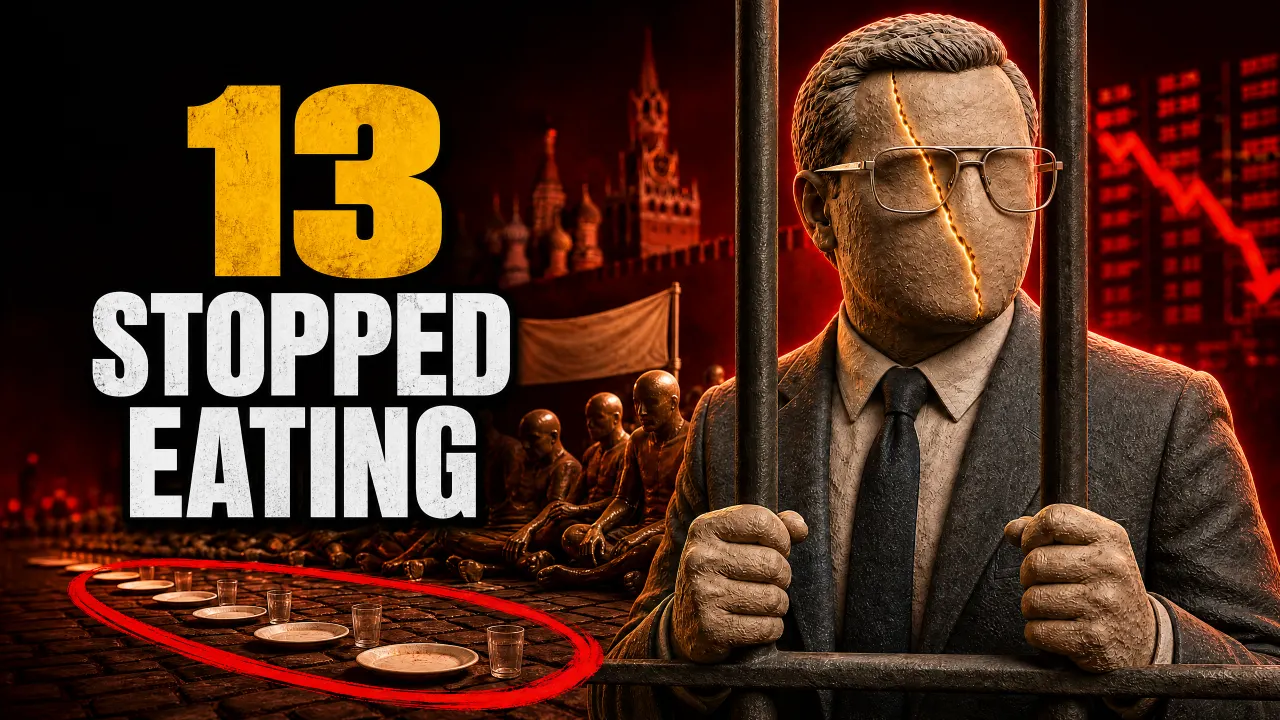
MMM, Sergei Mavrodi's company, was the biggest pyramid scheme in post-Soviet Russia. In February 1994 it began selling shares whose price the company itself set twice a week, always upward: in six months they went from 1,600 rubles to more than 100,000. On July 29, 1994, Mavrodi cut the price to 1,000 rubles. Nobody knows how many people put money in; estimates range from 2 to 15 million. The extraordinary part came next: his victims went on hunger strike to get him released and voted him into parliament. Twenty years later, with MMM Global, he ran the same system in Nigeria, South Africa and Peru, warning in writing that it was a pyramid.
In 30 seconds
- In 1994 MMM sold shares at a price Mavrodi set himself and that only ever rose; on July 29 he cut it from 115,000 to 1,000 rubles.
- Arrested in August 1994 over taxes, not over the pyramid, he got out of jail by running for parliament and won the seat in October.
- In 2007 he was sentenced to 4 years and 6 months for defrauding about 10,000 people who had filed claims, for 110 million rubles.
- In 2011 he launched MMM-2011 with a warning on the front page: “This is a financial pyramid.” He then exported it to Asia, Africa and Latin America.
Timeline
On February 1, MMM begins selling shares to the public at a price it sets itself.
Mavrodi cuts the share price from about 115,000 rubles to 1,000.
Released from jail as a candidate, he wins the Duma seat for Mytishchi.
MMM is declared bankrupt and Mavrodi goes into hiding.
He is arrested in Moscow carrying a passport in someone else's name.
A Moscow court sentences him to 4 years and 6 months for defrauding about 10,000 people.
He launches MMM-2011 with a warning on its website: “This is a financial pyramid.”
Nigeria's Securities and Exchange Commission labels MMM a Ponzi scheme.
MMM Nigeria freezes its participants' payouts “for one month.”
Mavrodi dies of a heart attack in Moscow, owing more than 1.6 billion rubles in court claims.
Who was Sergei Mavrodi?
Mavrodi was born in Moscow in 1955 and graduated in applied mathematics in 1978. He worked as a programmer until, in the early 1980s, he took a job as a night watchman on the metro and started copying and selling recordings of Western music and films on the black market. He was arrested for it in 1983 and released ten days later.
In the late 1980s he founded a cooperative with his brother Vyacheslav and with Olga Melnikova that imported computers and office equipment. Three partners, three initials: MMM. In October 1992 the joint-stock company was registered that, soon afterward, would start taking money from half the country.
How did the MMM pyramid scheme work?
On February 1, 1994, MMM shares went on sale to the public. One rule set them apart from any other share: the price was not set by the market. The company published it itself, twice a week, and always upward. Whoever sold collected the gain with the money of whoever bought. As long as more money came in than went out, everyone was winning on paper.
To make people believe it, Mavrodi did not hire a celebrity. He put a neighbor on television: Lyonya Golubkov, an excavator operator who cashed his dividends and bought his wife a pair of boots. His slogan, “I'm not a freeloader, I'm a partner,” became one of the most repeated lines of 1990s Russia. Years later, Mavrodi summed up its effect in an interview with journalist Dmitry Gordon: Lyonya was “a universal skeleton key to every soul.”
The context did the rest. In 1994 prices were soaring and many wages had gone unpaid for months. A pensioner put it this way to The Christian Science Monitor that July: “We don't believe in the government, but we believe in MMM.” Outside the headquarters at 26 Varshavskoye Highway, the lines wrapped around the block. Some people pawned their apartment or their garage to buy more.
What MMM did has a precise name: a pyramid scheme, with features of a Ponzi scheme, because investors did not have to recruit anyone to get paid, only wait for the price to rise. The difference between the two is explained in our guide Ponzi scheme vs pyramid scheme.
The crash of July 1994
In July 1994 the state stepped in. The tax police demanded more than $24 million in taxes and fines from MMM. Thousands of investors surrounded the headquarters and riot police showed up. Mavrodi answered with a full-page open letter blaming the government and asking what form “the robbed people's indignation” would take: a revolution or a civil war.
On July 29 he cut the price himself. According to Kommersant, the official quote had stood at around 115,000 rubles a share a few days earlier; from that day on, 1,000. His statement said they had been stopped “on the eve of a great leap.”
Six days later, Interior Ministry troops stormed his apartment and arrested him. But not for the pyramid: for hiding income at one of the group's companies. Running a pyramid was not a crime in Russia, and it would not be until 2016, when a specific article was added to the Criminal Code.
The victims who defended him and made him a lawmaker
This is where the case becomes something different. The victims did not turn on Mavrodi. They turned on the state. There were sit-ins in Red Square with “Hands off Mavrodi” banners, and thirteen shareholders went on hunger strike to demand his release. When MMM reopened two weeks later, more than two thousand people lined up in the rain, not to sell, but to buy again. “He's a fine fellow. He didn't cheat us, the government has,” a pensioner told The Moscow Times.
From jail, Mavrodi ran in the by-election for the Duma seat of Mytishchi, north of Moscow, left vacant after its deputy was murdered. As a candidate, the law required his release. He promised that, if he won, MMM would buy back every share. On October 30, 1994, he won, with about 28,000 votes that The Moscow Times attributed to the district's MMM shareholders. The next day he suspended trading in the shares.
In the interview with Gordon, recorded in 2010, he admitted he had gone to the Duma for the immunity and had not attended a single session except the first. The Duma stripped him of his seat in October 1995 for continuing to do business. In 1997 MMM went bankrupt and Mavrodi vanished. He was found in 2003 in a rented apartment in his own neighborhood, with a passport in another man's name.
The 2007 trial: ten thousand victims out of millions
The fraud case reached trial with more than 600 volumes of evidence. Of the millions affected, it covered 10,366 people: only those who had filed a claim. The proven loss was about 110 million rubles, around $4.3 million, a tiny fraction of what had moved through the scheme; investigators estimated the total could reach $100 million.
The courtroom was full of elderly women, many of them victims, and they defended him. “Let him go. He hasn't killed anyone,” one of them, aged 71, said, according to The Moscow Times. In April 2007 the judge sentenced him to 4 years and 6 months for defrauding investors “by deception, betrayal and abuse of trust.” Since he had spent almost all that time in pretrial detention, he walked free in May.
MMM-2011 and MMM Global: the pyramid that warned you at the door
In January 2011 Mavrodi announced MMM-2011 on his blog: 20% a month, 30% for retirees, payments from participant to participant. His website's front page greeted visitors with a warning: “This is a financial pyramid. You may lose all your money at any moment.” When the Russian regulator concluded it showed signs of a pyramid, Mavrodi replied on the radio that he said so on his blog in red letters, and that pyramids were not banned.
The confession scared no one off. In May 2012 MMM-2011 froze payouts, and in June Mavrodi admitted there would not be money for everyone. So he exported it. In July 2012 Panama's Superintendency of Banks warned about Spanish-language emails promoting “the pyramid financial scheme” of “Mr. Sergey Mavrodi.” India, Indonesia, China and South Africa followed.
The biggest blow, “MMM Africa,” reached Nigeria at the end of 2015: 30% a month, with account-to-account transfers between those who “provide help” and those who “get help.” To join, you had to tick a box: “I have read the warning.” On August 30, 2016, Nigeria's Securities and Exchange Commission wrote that MMM had no tangible business model and was a Ponzi scheme. On December 13, 2016, twelve days before Christmas, MMM Nigeria froze payouts “for one month.” In March 2017 Nigeria's deposit insurance agency, the NDIC, estimated about 3 million people affected and 18 billion naira lost, an estimate that, by its own account, was based on social media data. In November 2017 Peruvian television showed meetings in Huancayo where Mavrodi's photo was displayed with reverence.
What happened next
Mavrodi died of a heart attack in Moscow on March 26, 2018, aged 62. His body spent four days in the morgue with no one claiming it. He left more than 200 lawsuits from former investors totaling 1.607 billion rubles. According to a lawyer quoted by the Russian outlet 360.ru, the funeral was paid for by members of the “MMM-2011 Guard,” his second pyramid. Weeks later, MMM announced it was closing, reminding everyone that they had all “read the warning.”
Today the Bank of Russia keeps, on its list of entities showing signs of a financial pyramid, a network that uses his name: “MMM Reborn.”
Law of Deception No. 11: how to spot the same trap today
The law this case adds to MATERIUM's Laws of Deception is this: when the victims defend the con man, he no longer needs to hide. Mavrodi hid from the police, but never from his victims. The levers were distrust of the state, trust in the neighbor who got paid, and the shame of admitting the money was gone. In his second act he added one more: telling the truth. Whoever joins knowing it is a pyramid believes they will get out before the end.
The signs that repeat today:
- ”Mutual aid,” gifting circles, “blessing looms” or abundance mandalas. Money passes from some participants to others, and each one gets paid when someone new joins. It is the mechanics of MMM Nigeria under another name.
- A fixed, sky-high return. 20% or 30% a month is not an investment: it multiplies money more than ninefold or twentyfold in a year.
- The warning that protects no one. An “I understand the risks” checkbox does not make a system legal or safe; it only shifts the blame onto whoever ticks it.
- A common enemy. “The banks are robbing us,” “the system is rigged.” Anti-establishment talk is there so the victim defends the organizer when the regulator arrives.
- ”Temporary” freezes. When payouts stop “to protect the system,” the system has already collapsed.
In the United States, the FTC treats pyramid schemes as illegal, and anyone who takes money from the public to invest it must be registered. Before you join anything, look up the firm and the person on FINRA BrokerCheck and in the SEC's records, and report a scheme at ReportFraud.ftc.gov. In the United Kingdom, check the FCA Register and its warning list of unauthorized firms, and report fraud to Report Fraud (formerly Action Fraud). Our guide on how to check if a broker is registered walks you through it, and if someone invites you to a “mutual aid” group on WhatsApp or Telegram, our guide on how to spot a scam lists the questions to ask before you put in a single dollar.
Watch the full episode
Episode 11 of MATERIUM reconstructs the story of Sergei Mavrodi from the Moscow metro to Troyekurovskoye Cemetery, with the 1994 press, the Lyonya Golubkov ads and the official warnings from Nigeria and Panama. It is in the episode on Mavrodi and MMM.
 The full episodeRussia's Biggest Pyramid Scheme: His Victims Elected Him to Parliament
Subscribe for the premiere
Frequently asked questions
What was Sergei Mavrodi's MMM?
A Russian company that in 1994 sold shares to the public at a price it set itself, always upward, and paid those who sold with the money of those who bought. On July 29, 1994, the price fell from 115,000 rubles to 1,000 in a single day.
How many people lost money in MMM?
Nobody knows exactly. Press estimates range from 2 to 15 million people in Russia alone. The courts recognized about 10,000 victims in 2007: only those who had filed a claim.
What sentence did Sergei Mavrodi get?
In April 2007 a Moscow court sentenced him to 4 years and 6 months for fraud, with proven losses of 110 million rubles, about $4.3 million. He had already served almost the whole term in pretrial detention and walked free weeks later.
What happened with MMM in Nigeria and Africa?
Between 2015 and 2017 MMM Global operated in South Africa, Zimbabwe and Nigeria, promising 30% a month. Nigeria's Securities and Exchange Commission called it a Ponzi scheme in August 2016, and the country's deposit insurance agency estimated about 3 million people were affected.
Sources
- The Moscow Times, “Mavrodi Convicted of Fraud in MMM Trial” (2007)
- The Christian Science Monitor, report on the MMM lines (July 28, 1994)
- Kommersant, “Падение курса акций АО МММ” (July 30, 1994)
- Lenta.ru, interview with Sergei Mavrodi (October 16, 2014)
- SEC Nigeria, public notice on MMM Federal Republic of Nigeria (August 30, 2016, archived copy)
- Daily Trust, NDIC estimate of MMM losses in Nigeria (2017)
- Superintendency of Banks of Panama, Public Notice 16-2012
- Bank of Russia, warning list: “MMM Reborn”